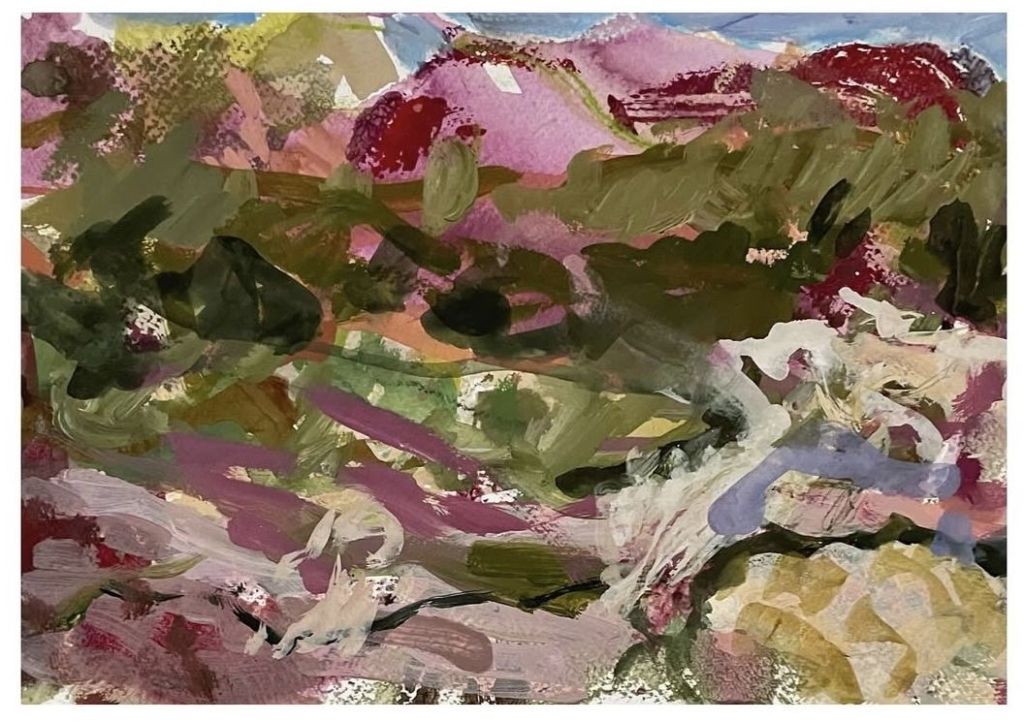
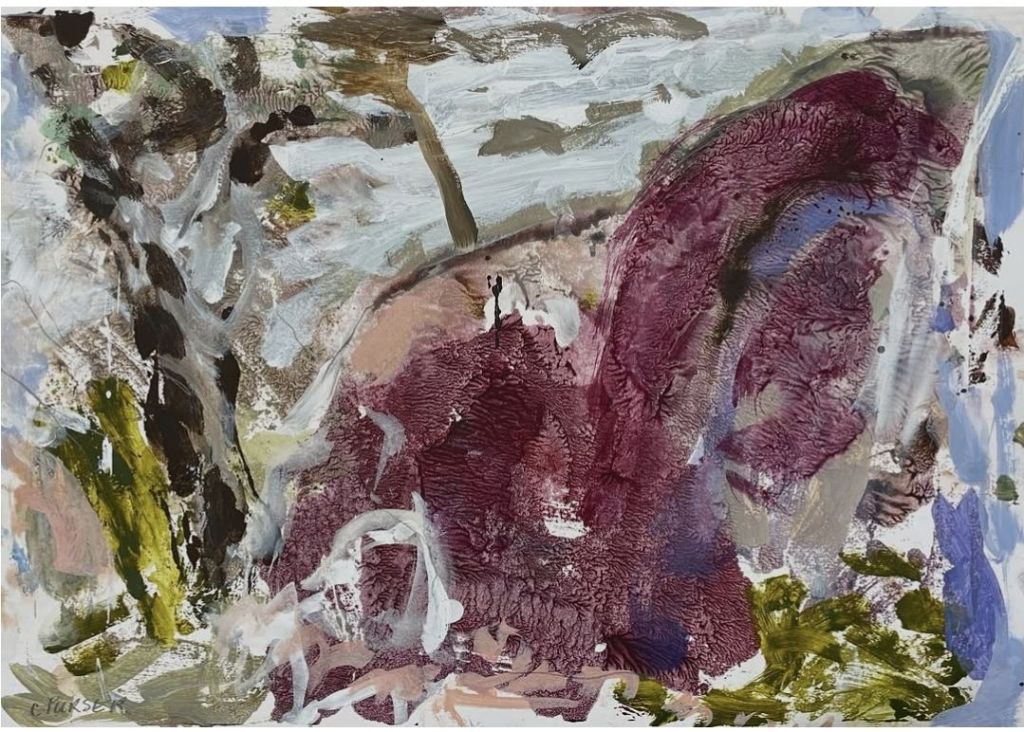
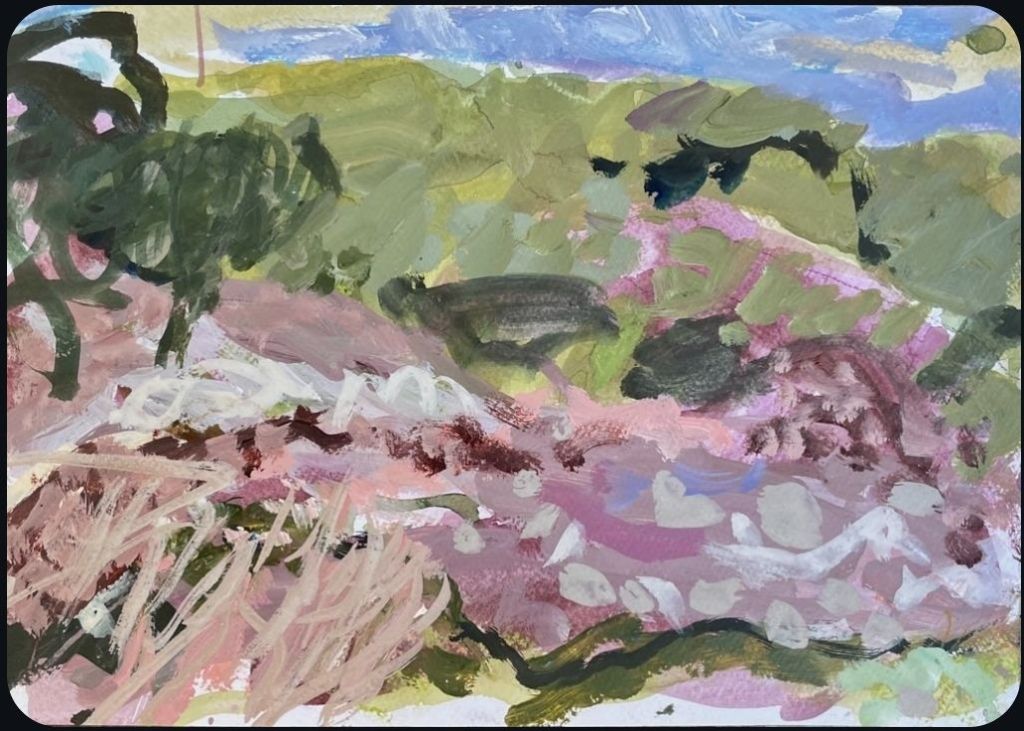
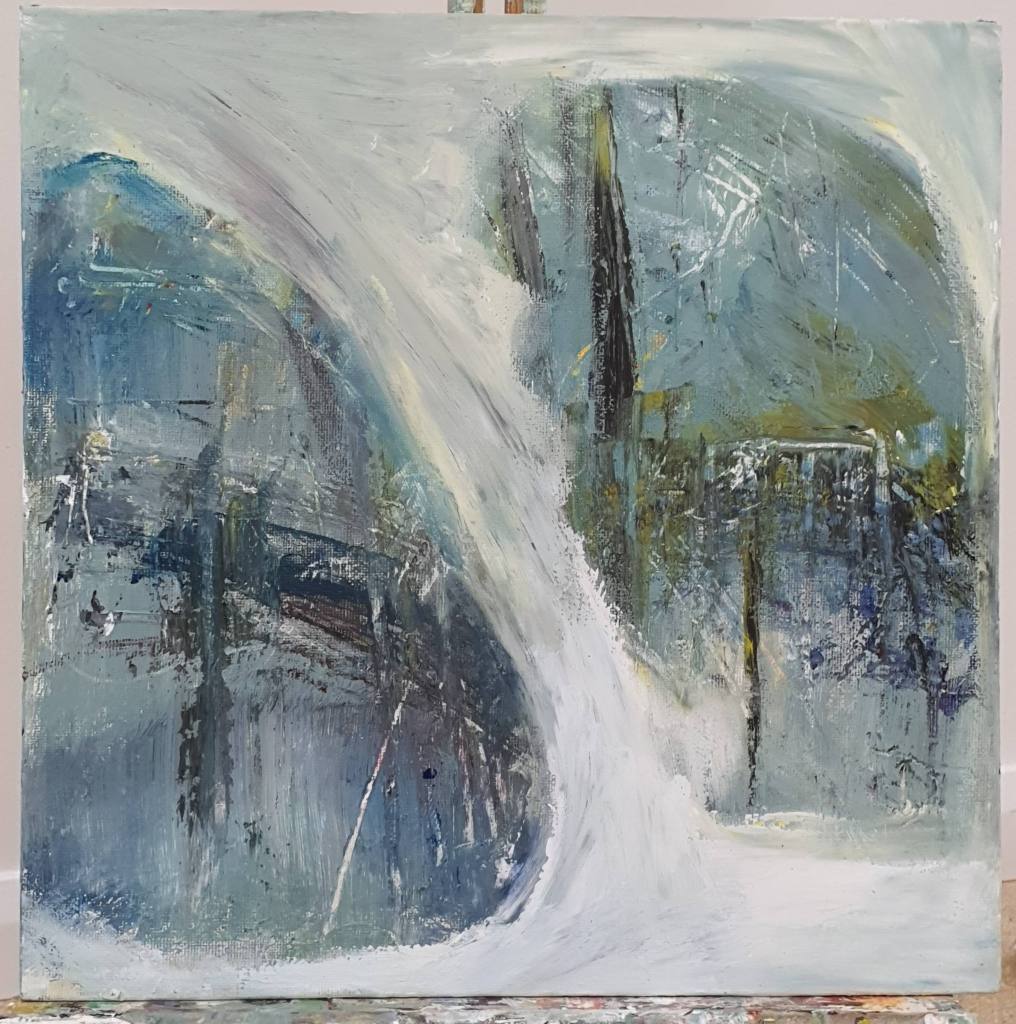
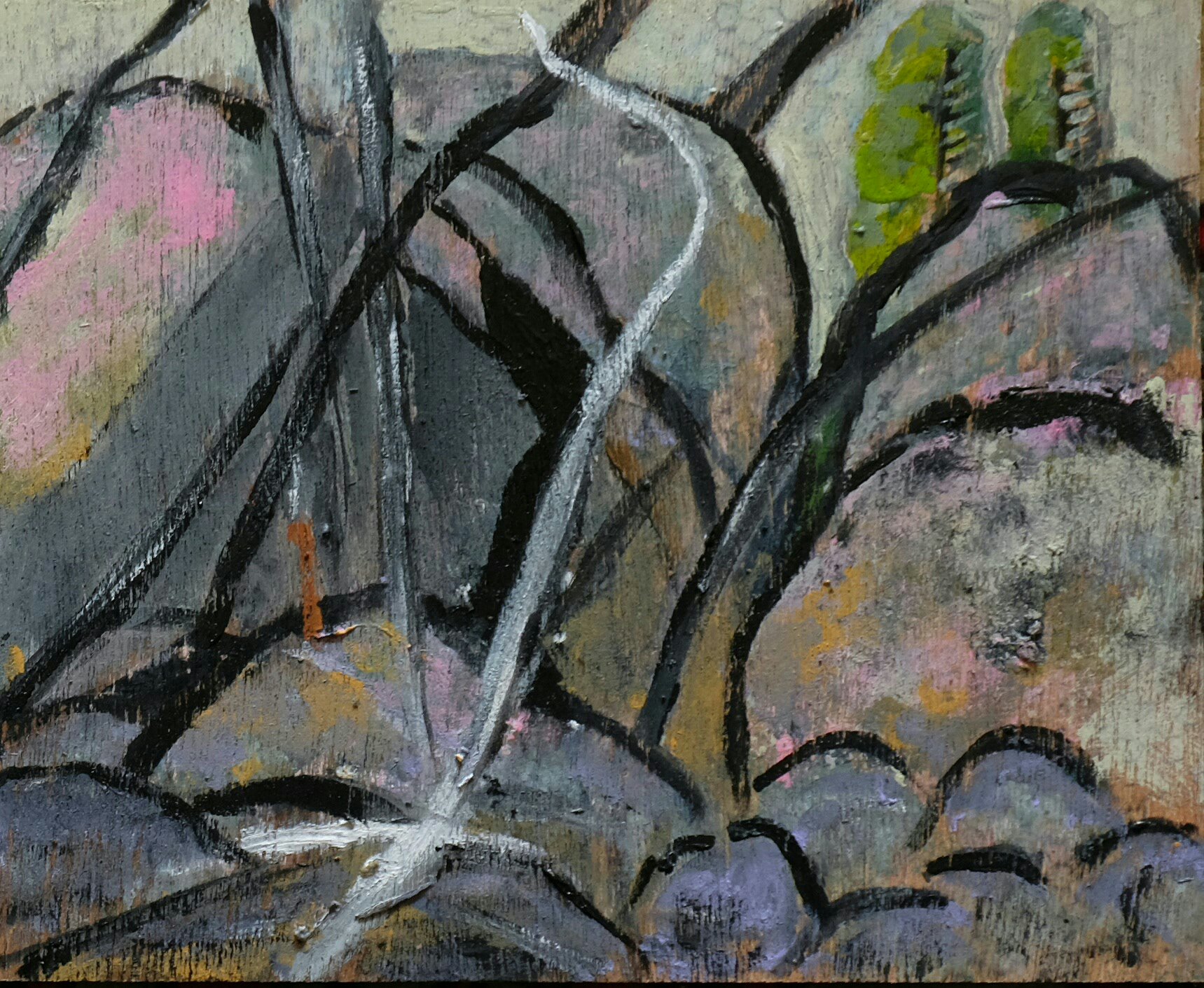
We recently invited Clare Purser a plein air painter based in Brisbane to spend a week wintering at Haneena Hill 10 kilometres west of Stanthorpe. We first met Clare when she received the major prize during the Milburn Art Awards, a biennial national landscape painting exhibition held at the Brisbane Institute of Art.
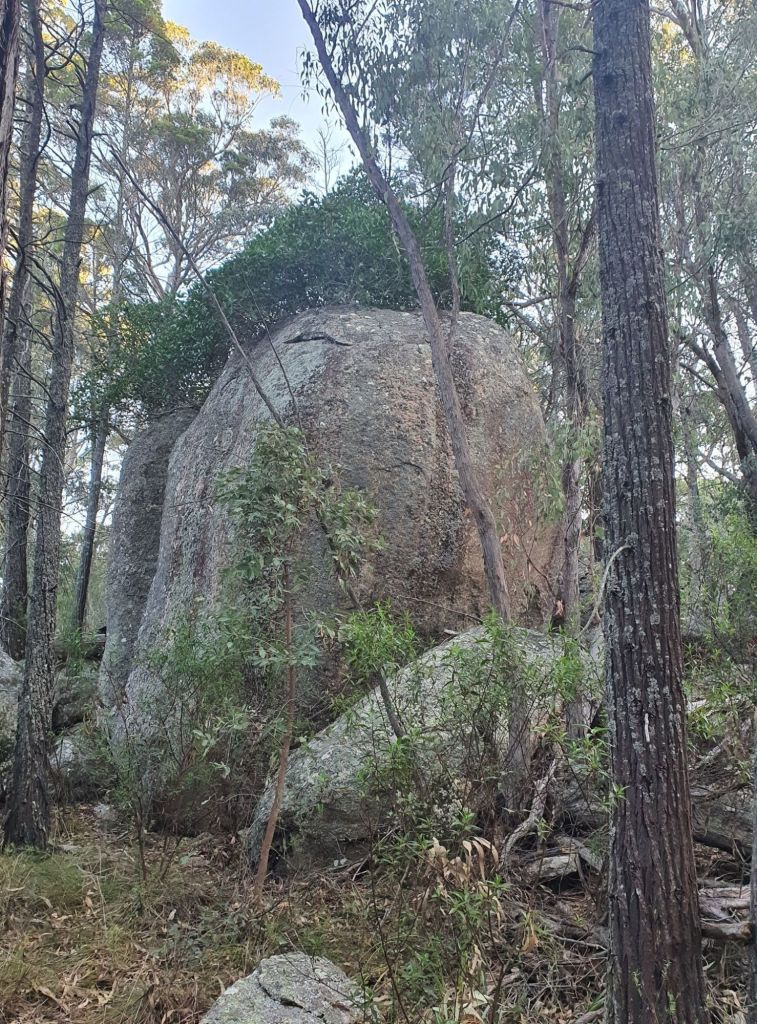
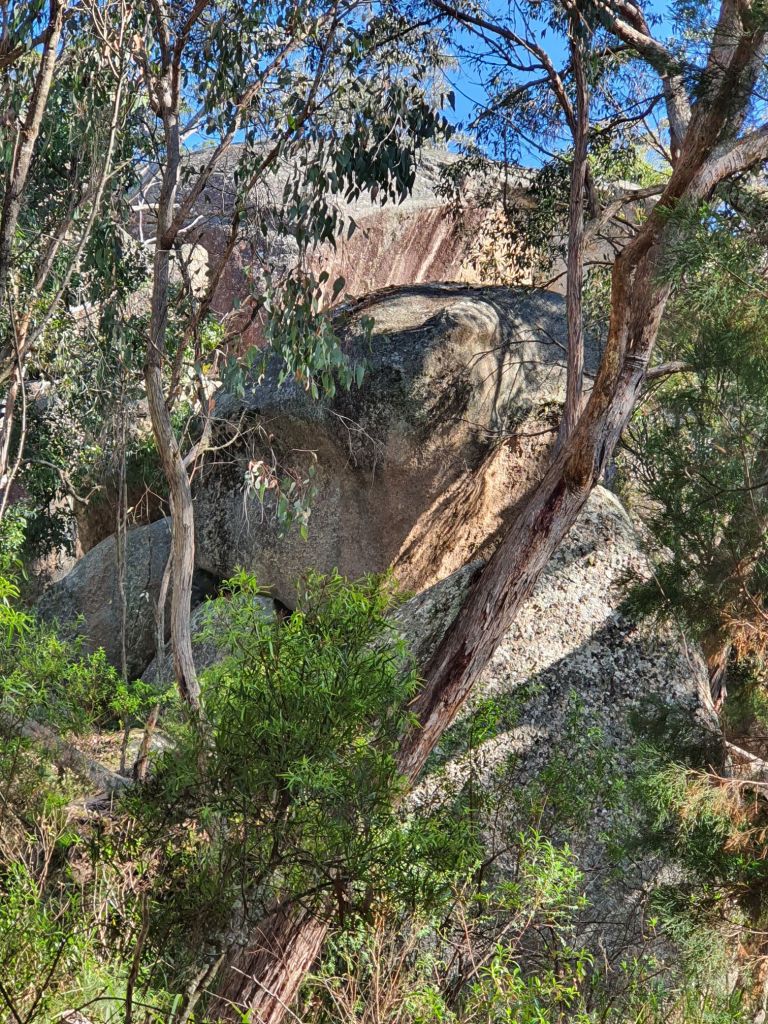
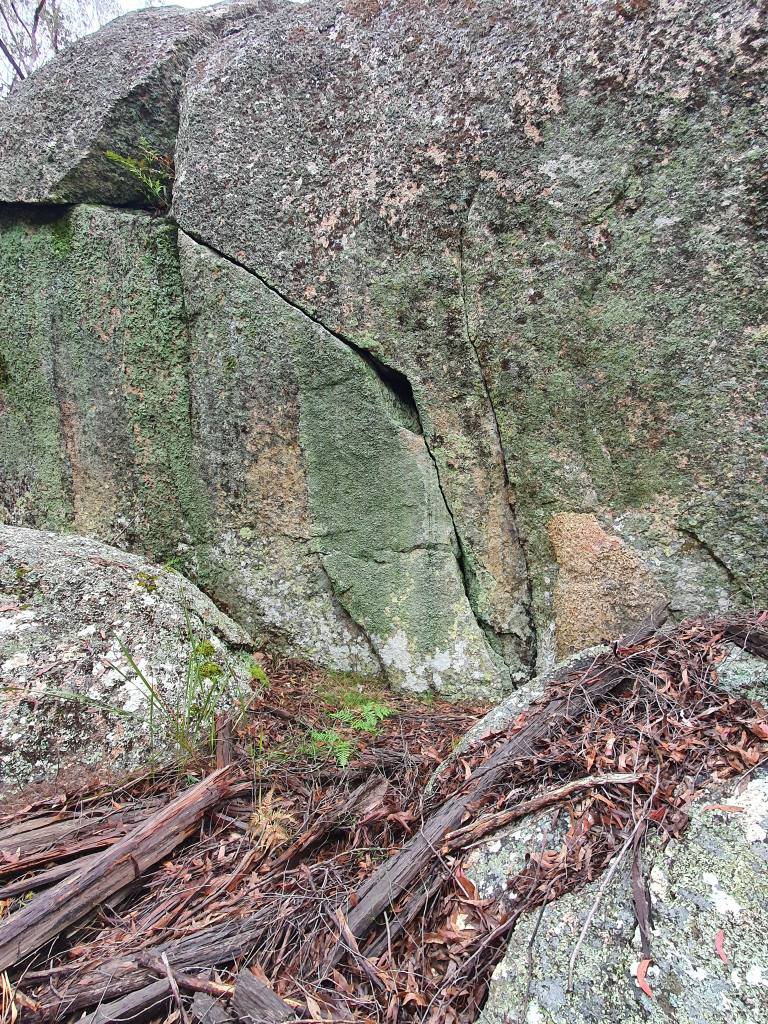
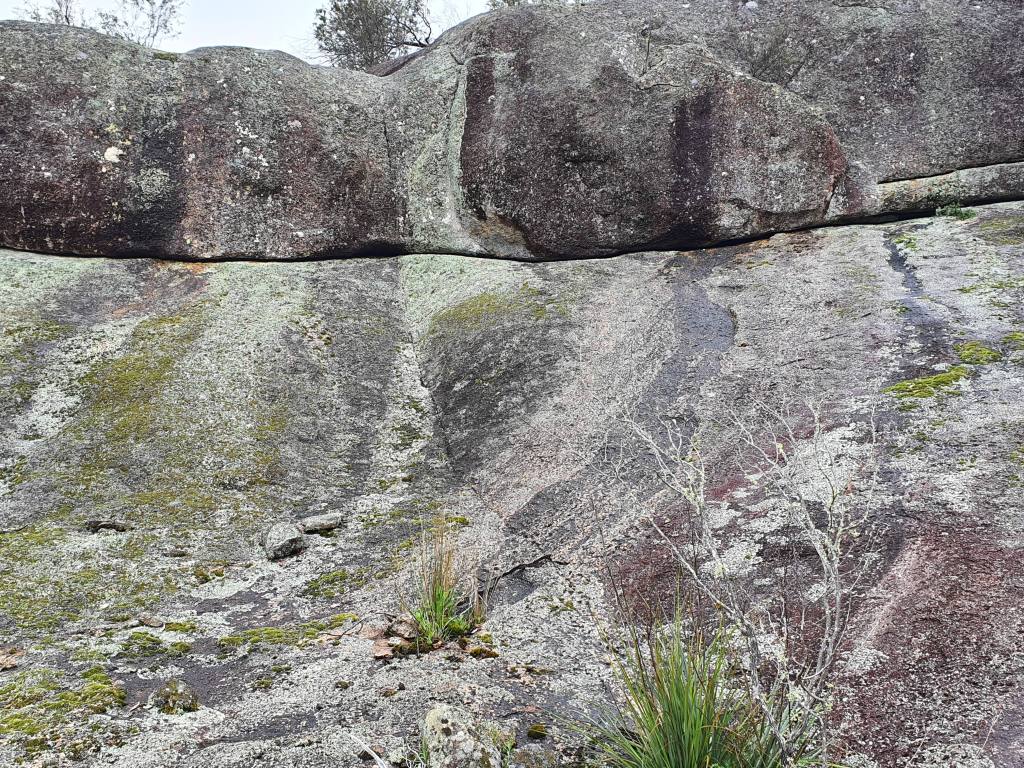
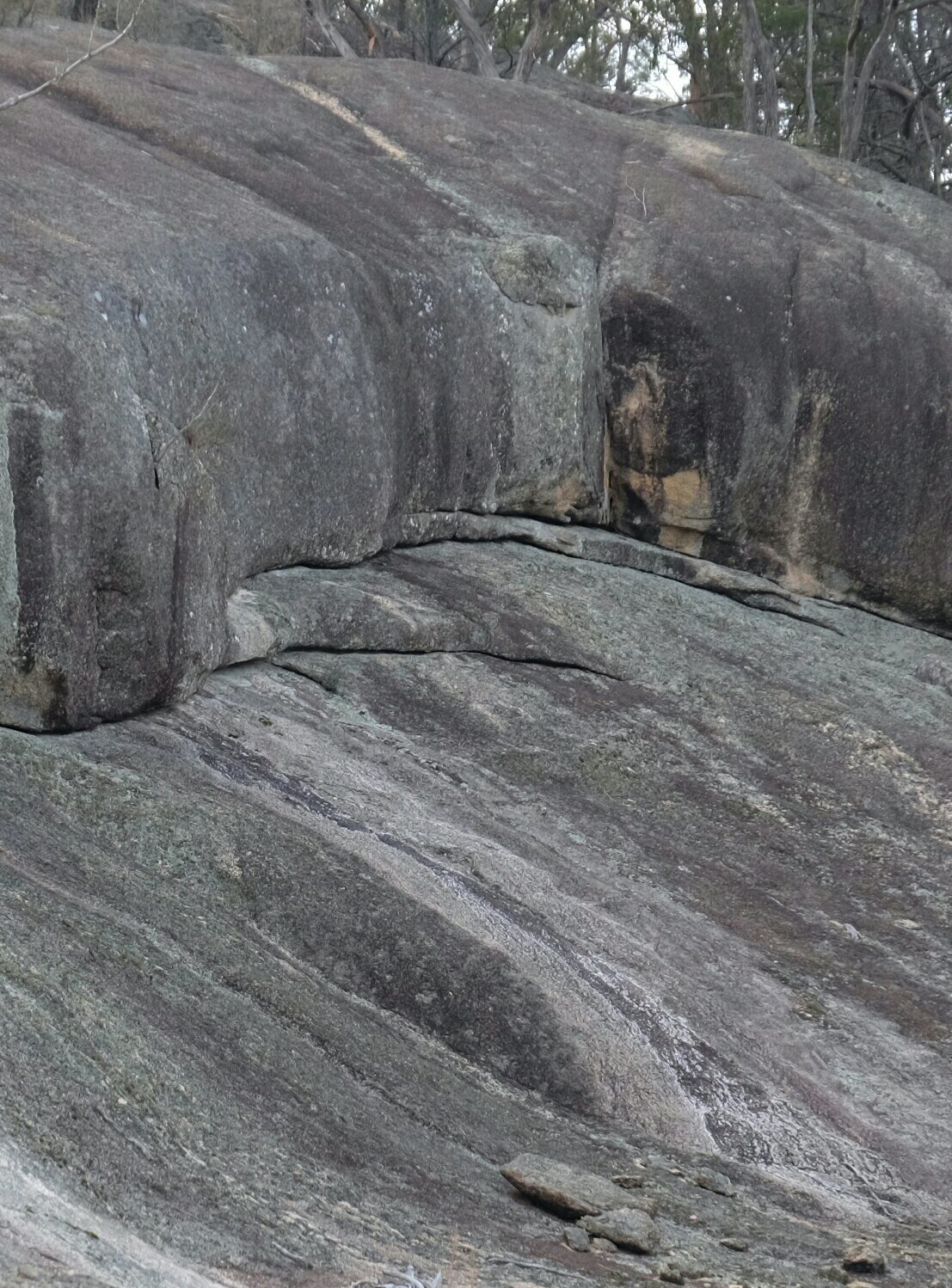
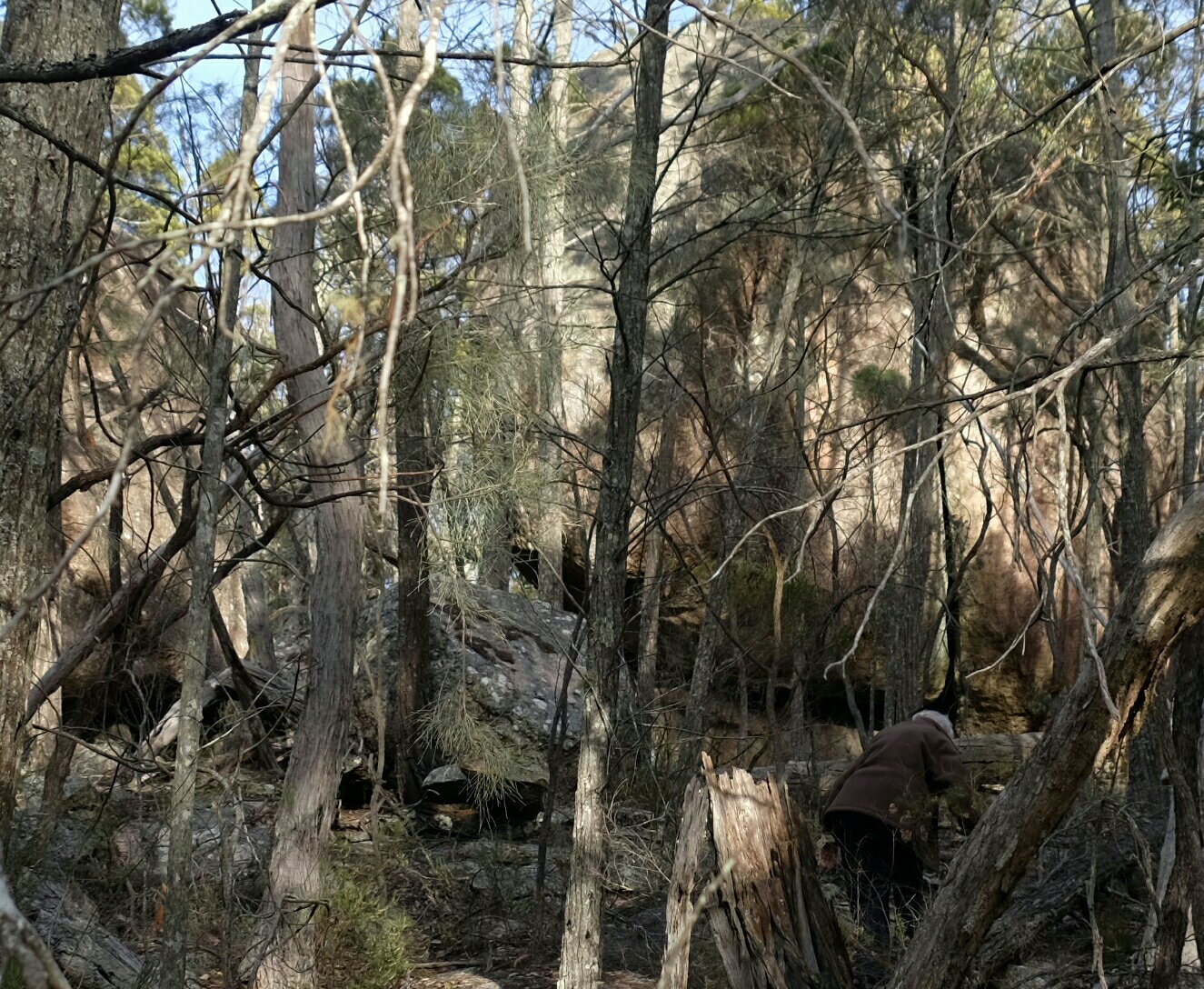
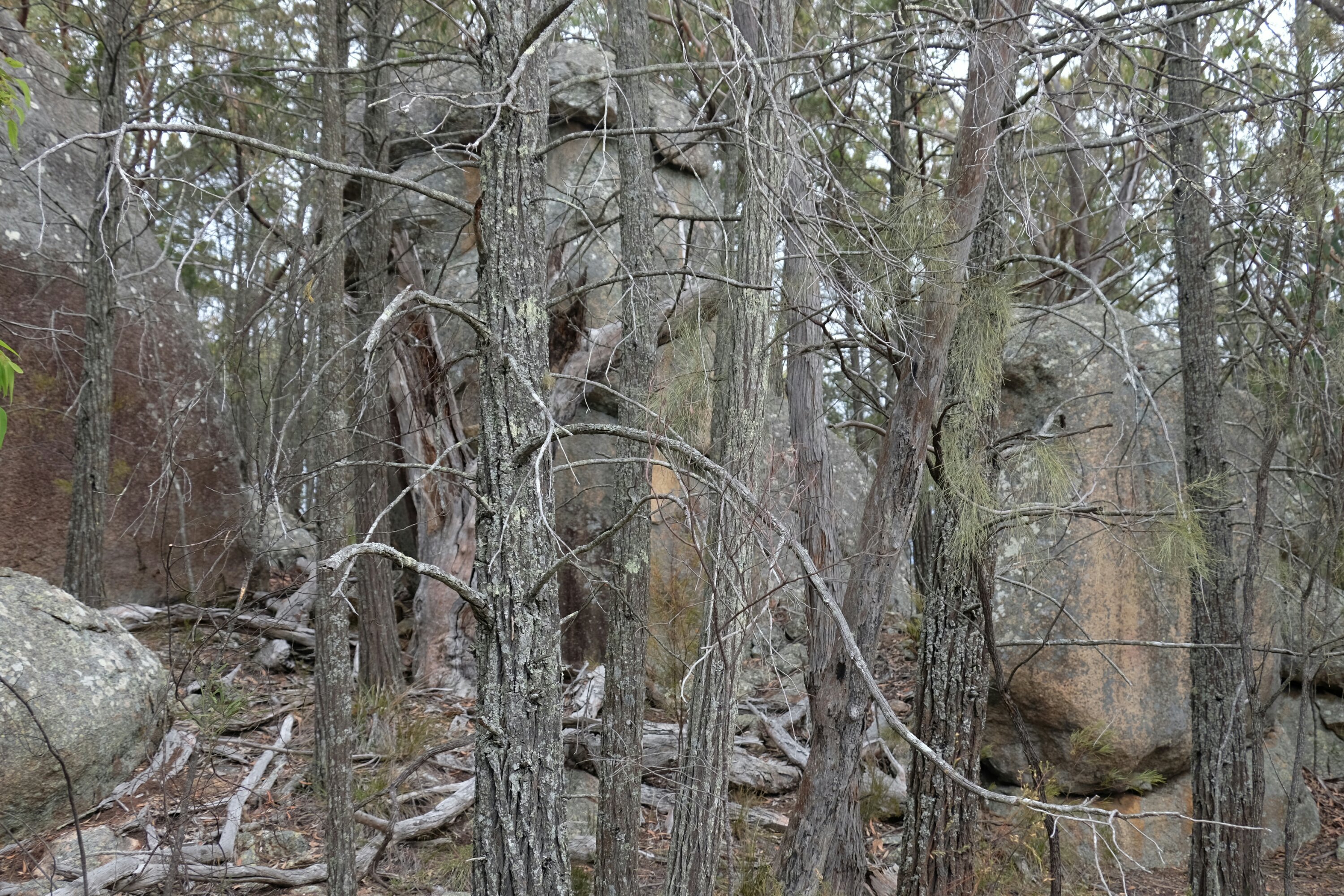
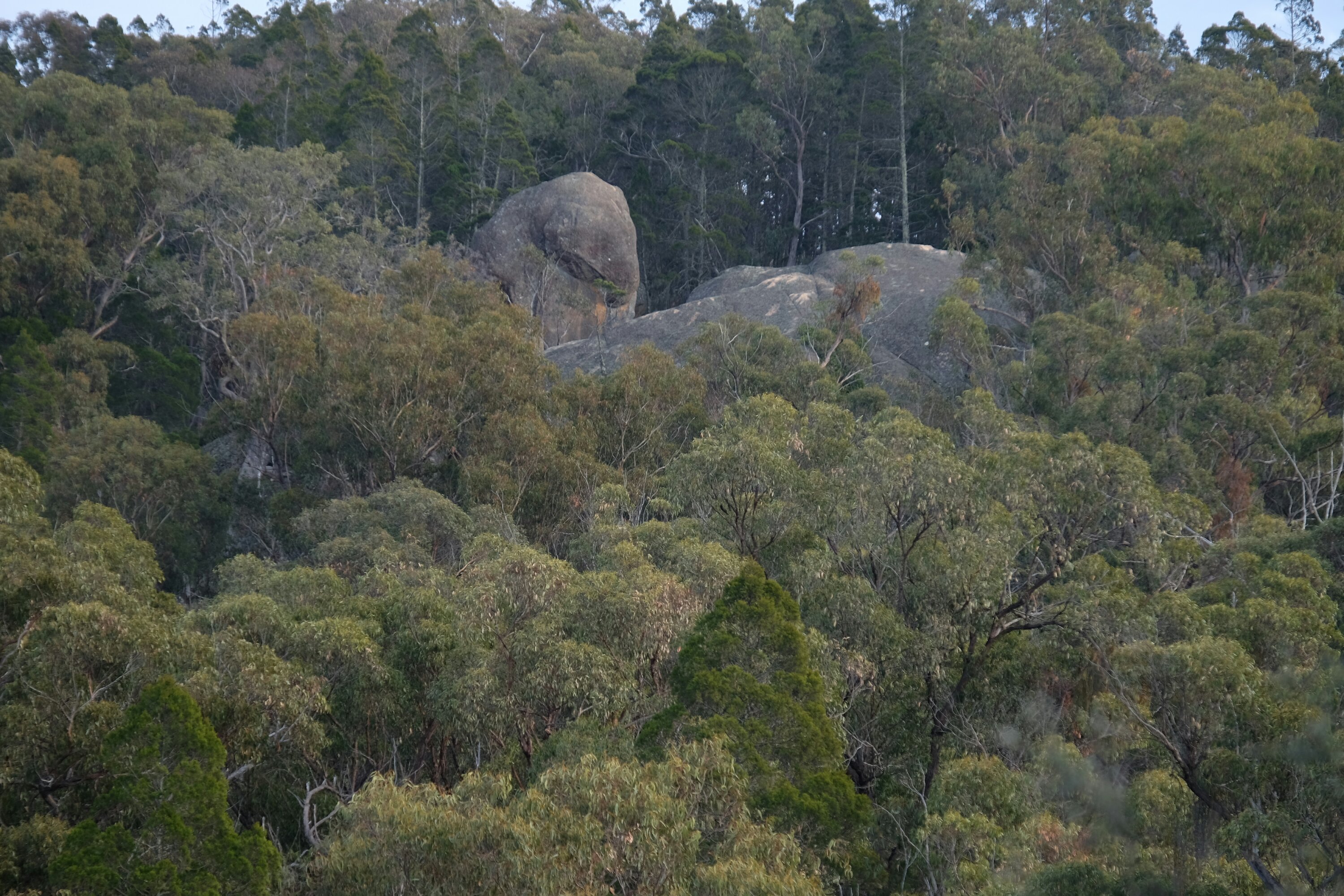
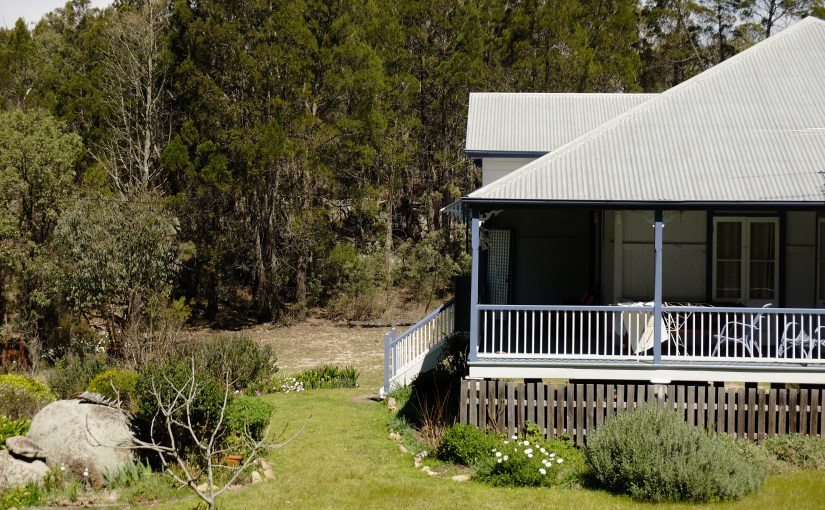
The Haneena Hill environment compresses many of the features the Granite Belt is famous for, labyrinthine rock structures, escarpments and stands of Eucalypt and Cypress forests with high views to the east and southwest.
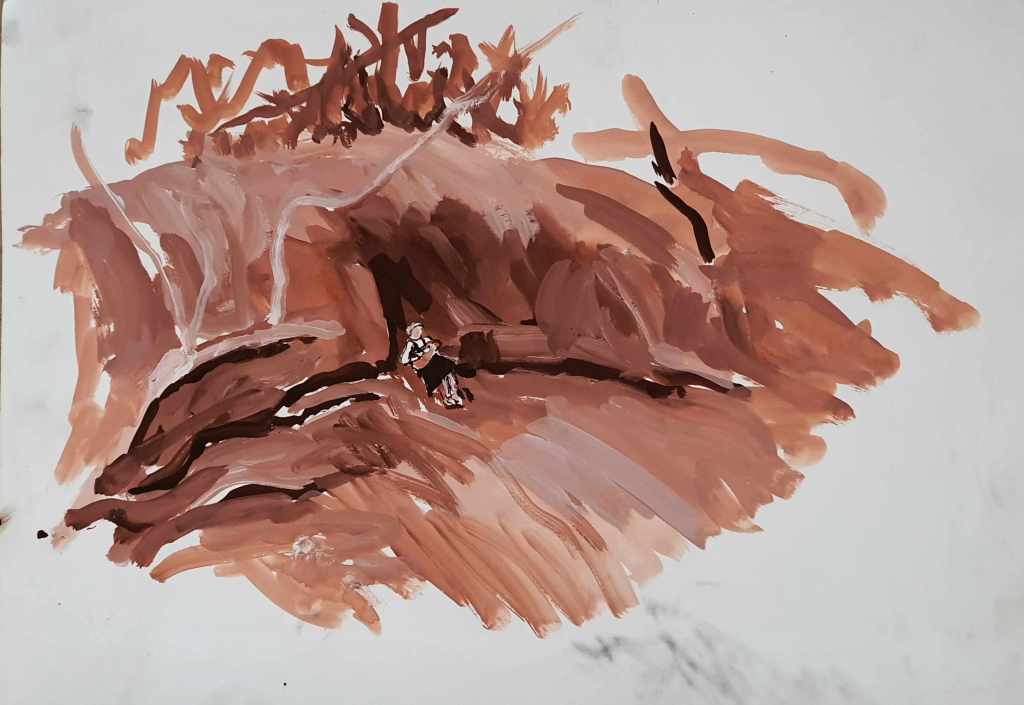
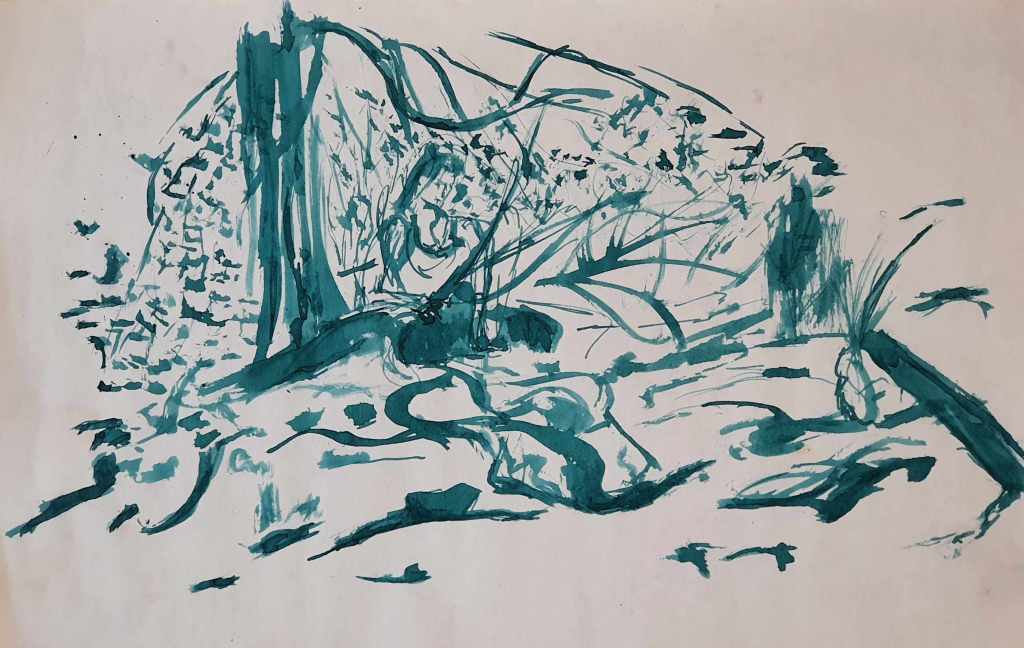
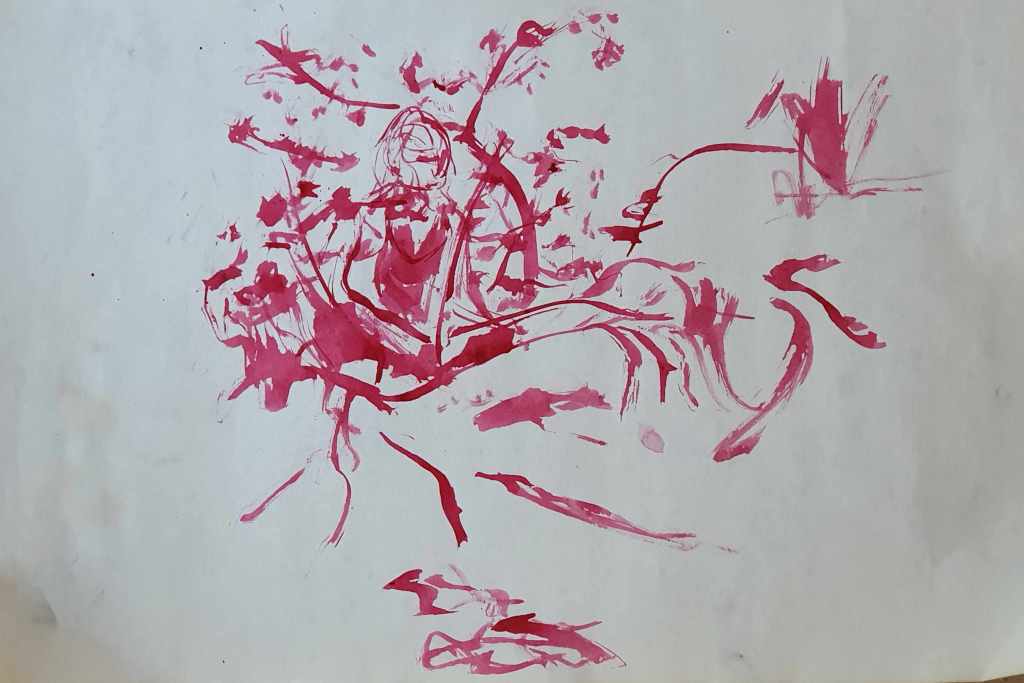
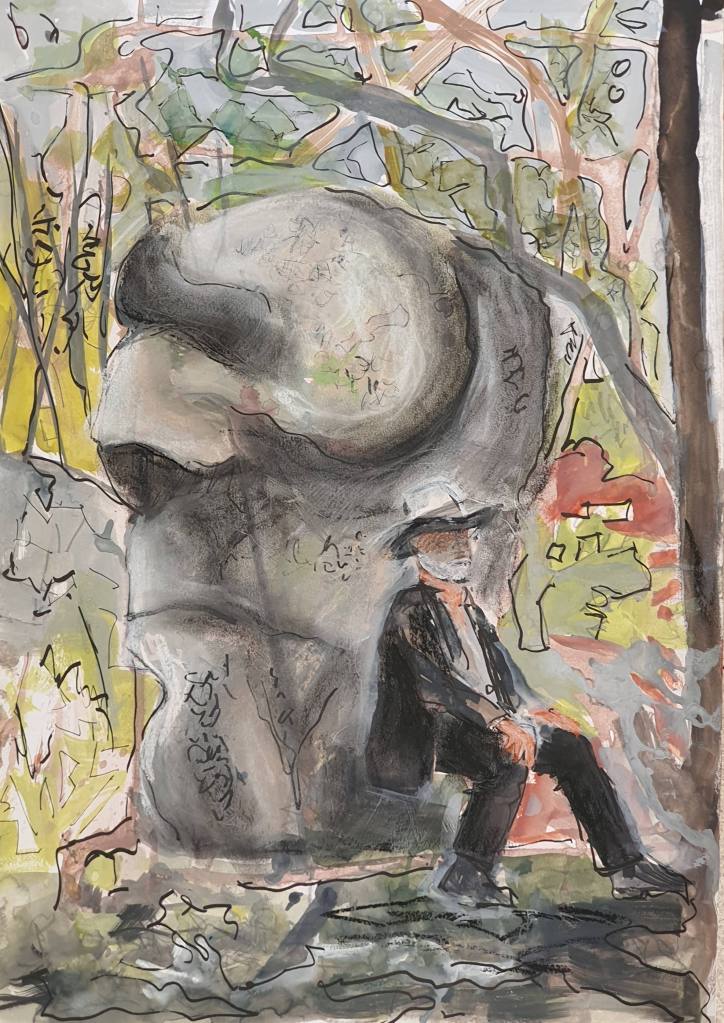
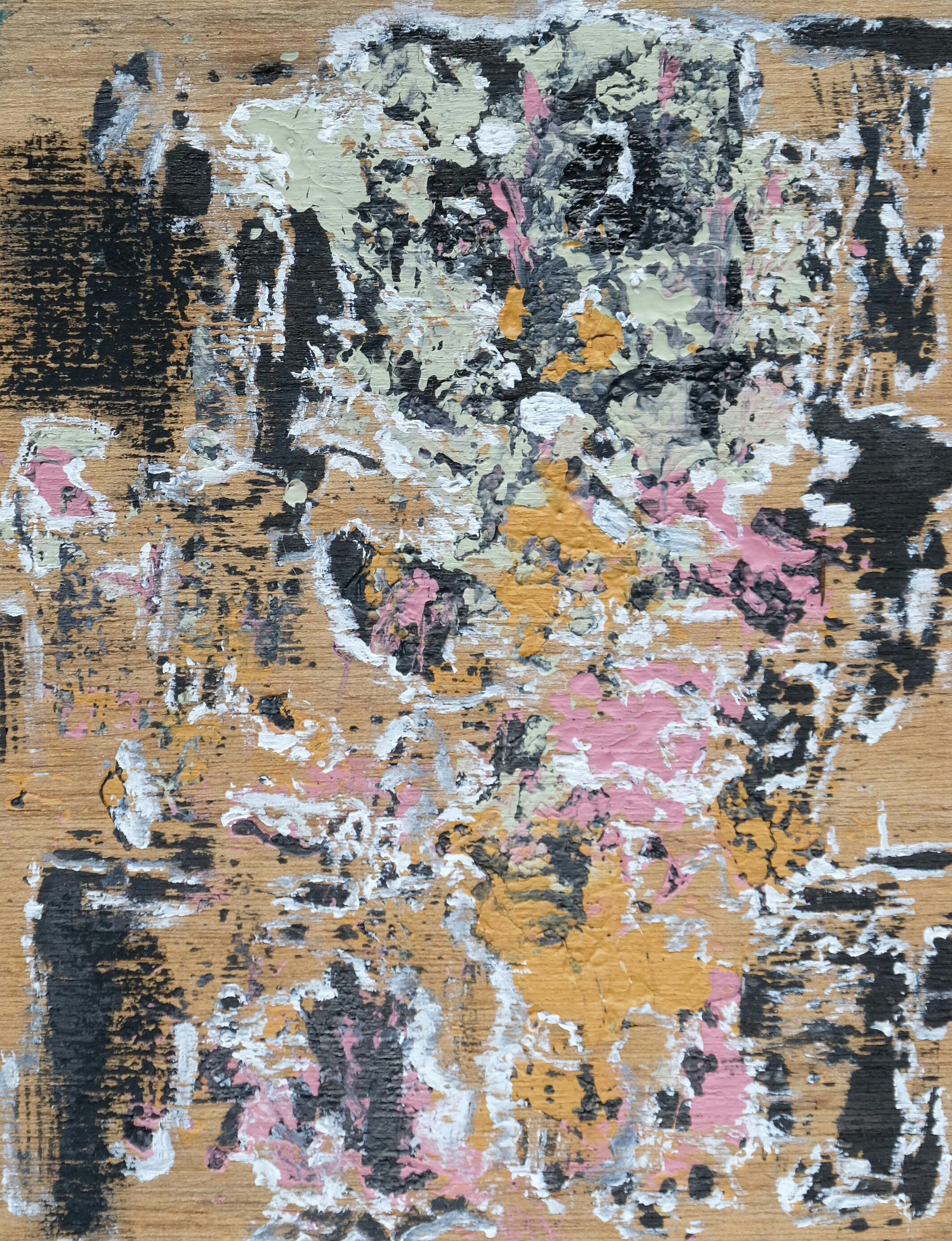
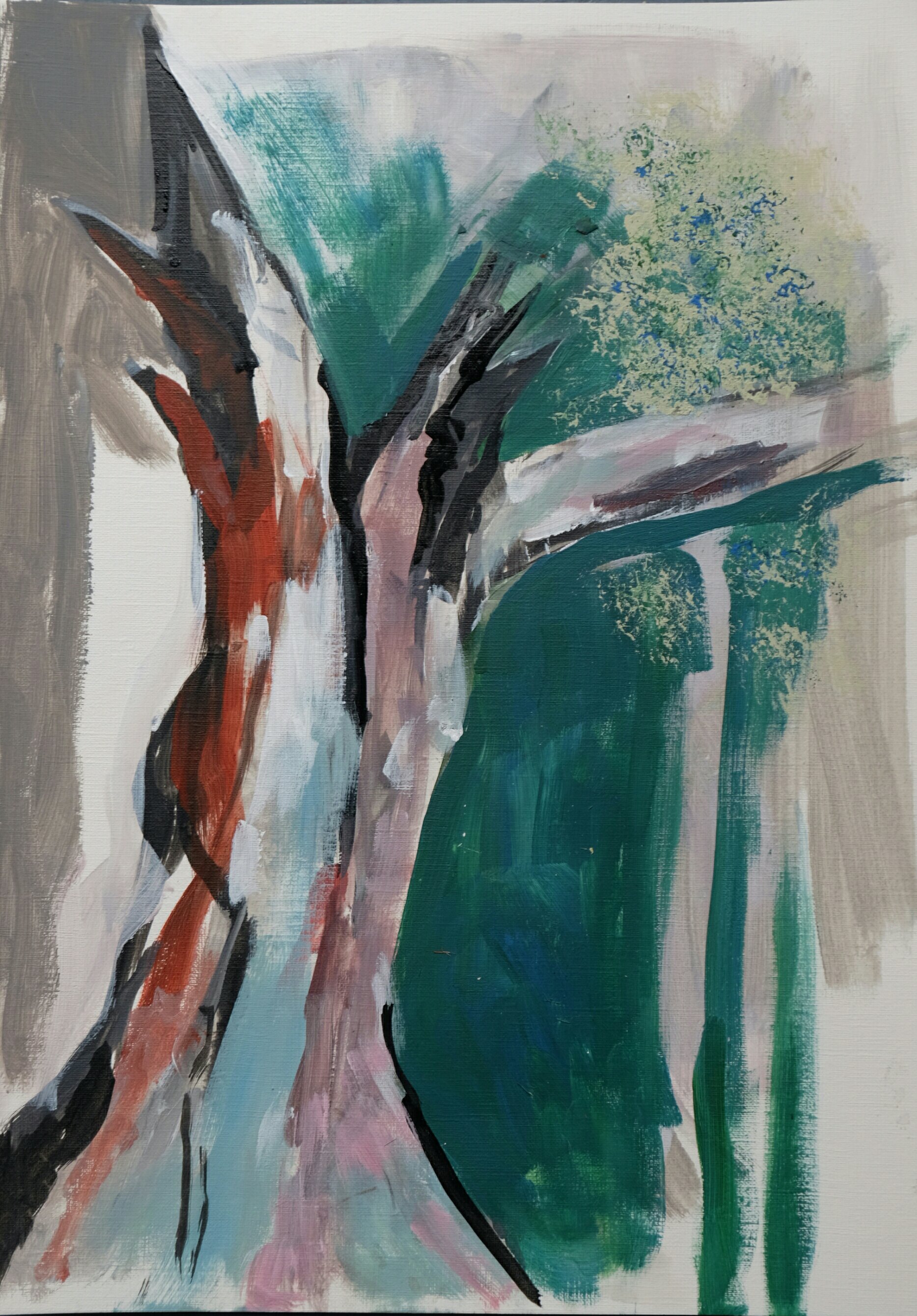
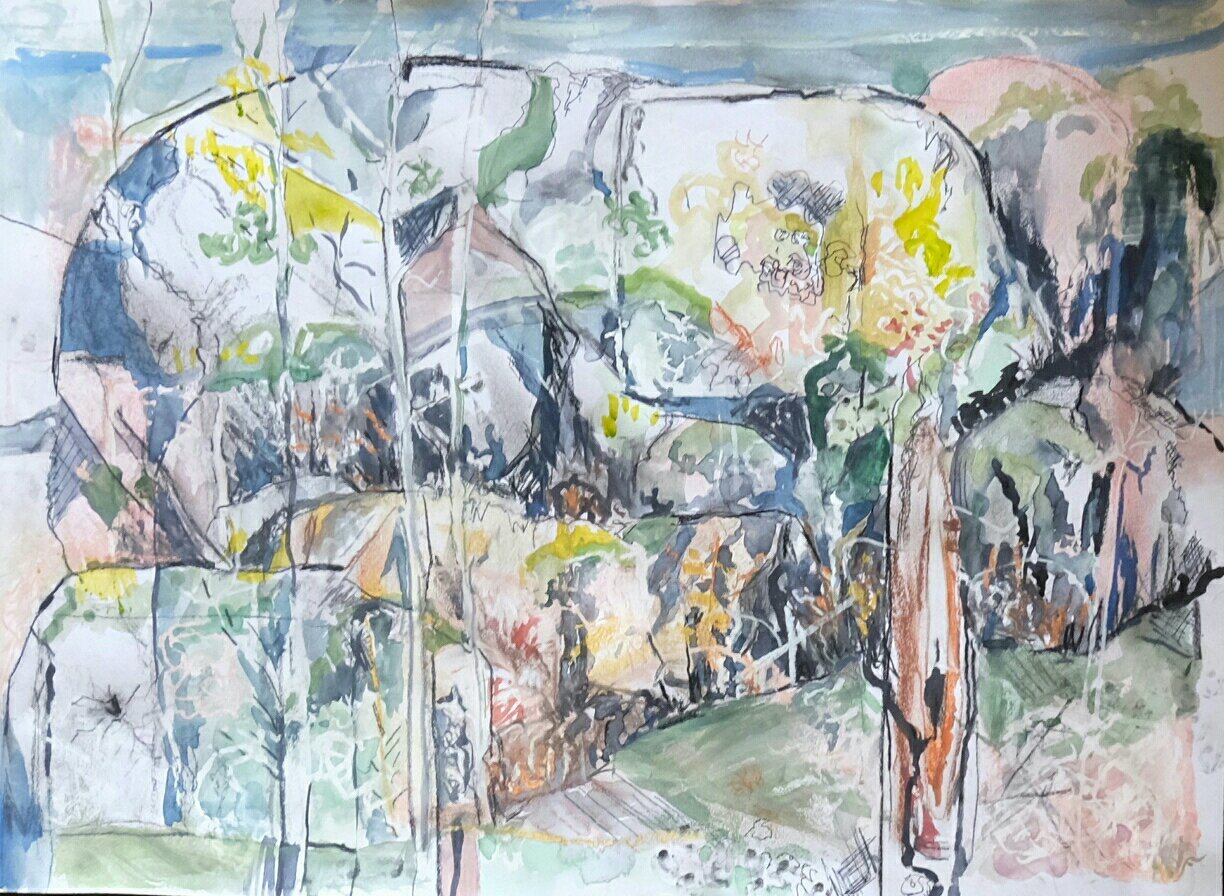
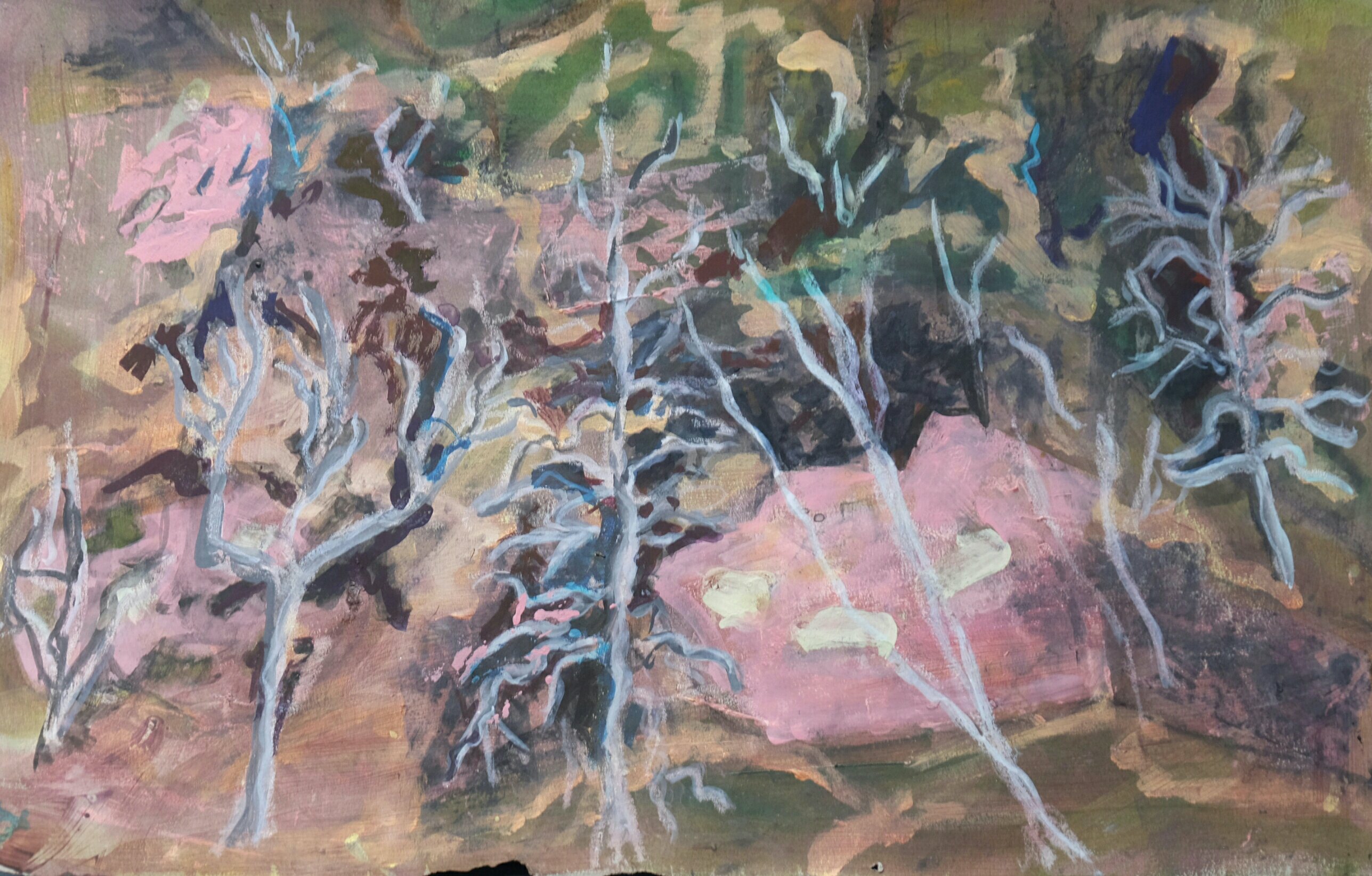
Clare Purser, gouache and acrylic on paper
Clare happened to arrive during a freezing southwesterly wind but managed to layer up and paint outside for part of her visit and for the rest shared one of our studios to process the atmosphere of rocks and forest. We quickly developed a rapport with Clare, good conversations about art at meal times and she willingly included herself in our routine of studio work into the night.
Clare travels widely for inspiration to many sites in Queensland and beyond, she accomplished many painting studies on her stay which she will likely develop into fully fledged painting to show at the Woolloongabba Art Gallery where she’s represented.
Drawing and painting workshop 9th and 10th of November 2024.
This workshop is an exercise in imagining our natural environment as diverse spaces. On the one hand, long-standing, village-like cooperative interactions between flora and fauna, on the other as riverine passages such as steep valley terrain abruptly influenced by the elements encouraging quickly changing life forms.
Participants will have the opportunity to make work in several different, but accessible natural settings. We have observed areas being created by wallabies who nurture certain grasses, rock rooting plants and lichens colonizing cliff faces, and other spaces in which organisms have formed observable alliances by creating protective habitats.
The assumption we bring to this workshop is that to perceive the forest as village we need to change our perception of The Natural from a world external to human social experience to a participatory one.
In general we experience a ‘theatre’ of social space in three significant ways, first we can be instrumental in acting on people and things, second we represent the social to ourselves through language (verbal, pictorial) , and third we have the ability to imagine the world differently.
As humans we lack other animals’ intuitive sense orientation in the world, so we are forced to rely on our capacity to remake, to imagine, to fantasize.
Anne Carson points out that that the full form of Descartes’ well known dictum, ‘I think, therefore I am’, is actually ‘I doubt, therefore I think, therefore I am’. Carson’s commentary on the ancient poet Sappho highlights the geometric space of desire which ousts the stability of singular sense of self, explaining that in any passionate relationship between people and/or things in the world there two positions of experience, from the self who enters the scene, and from the self affected by it. These form a triangle with what is being perceived, whether as with Sappho, a lover, or something or someone in a more generalized situation.
The weekend workshop will consist of four three hour sessions on Saturday and Sunday morning from 9am to 12pm and 1pm to 4pm and with lunch supplied. The cost is $200 all inclusive. The property is located 12kms West of Stanthorpe, Qld.
To participate in the workshop you’ll need a range of drawing /painting materials and accessories (paper, water, rag, stool) that you are familiar with and can carry to the sites, distances from 25 to 200 metres.
If you are interested in attending please email Barbara at barbarapenrose3@gmail.com.
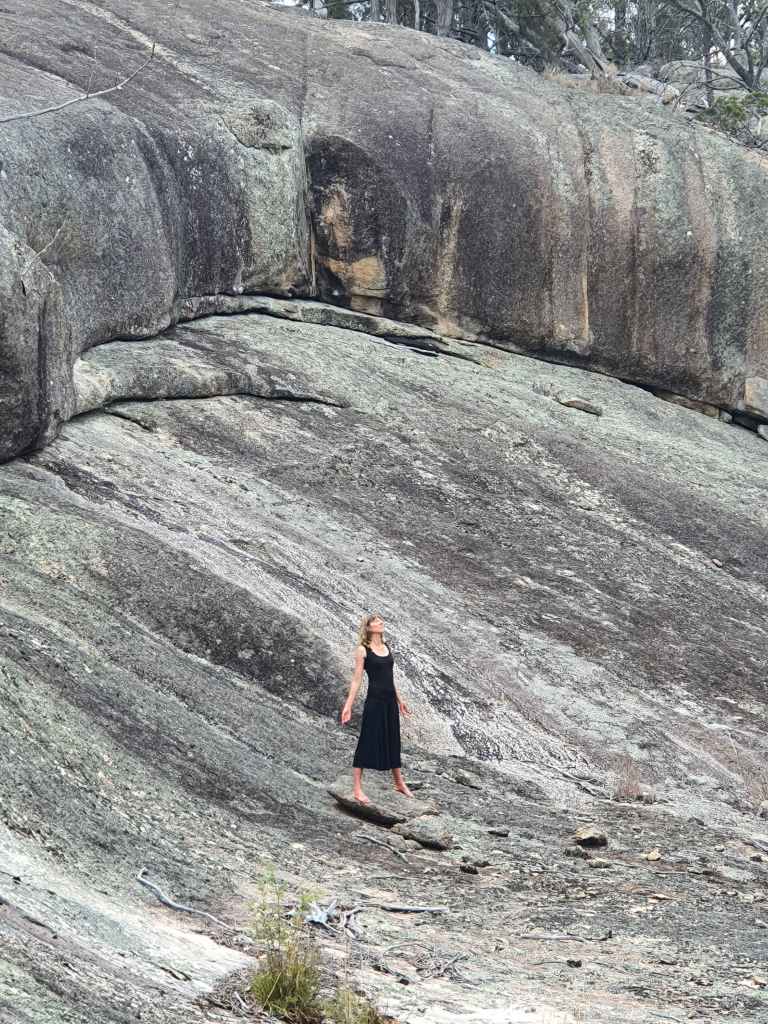
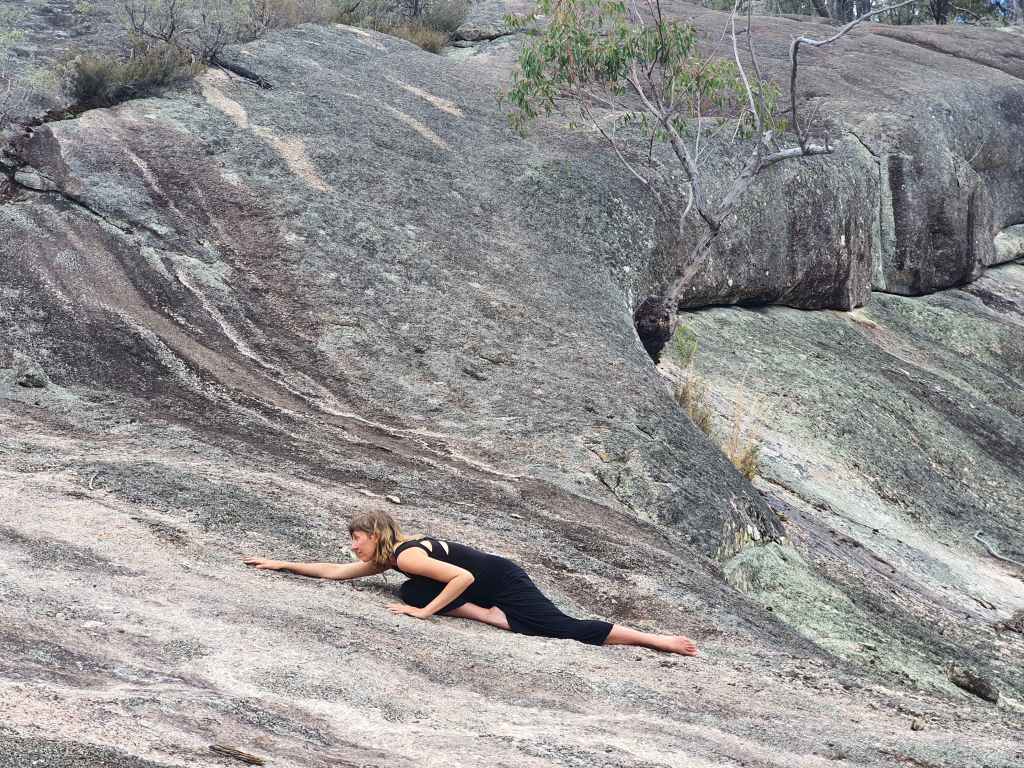
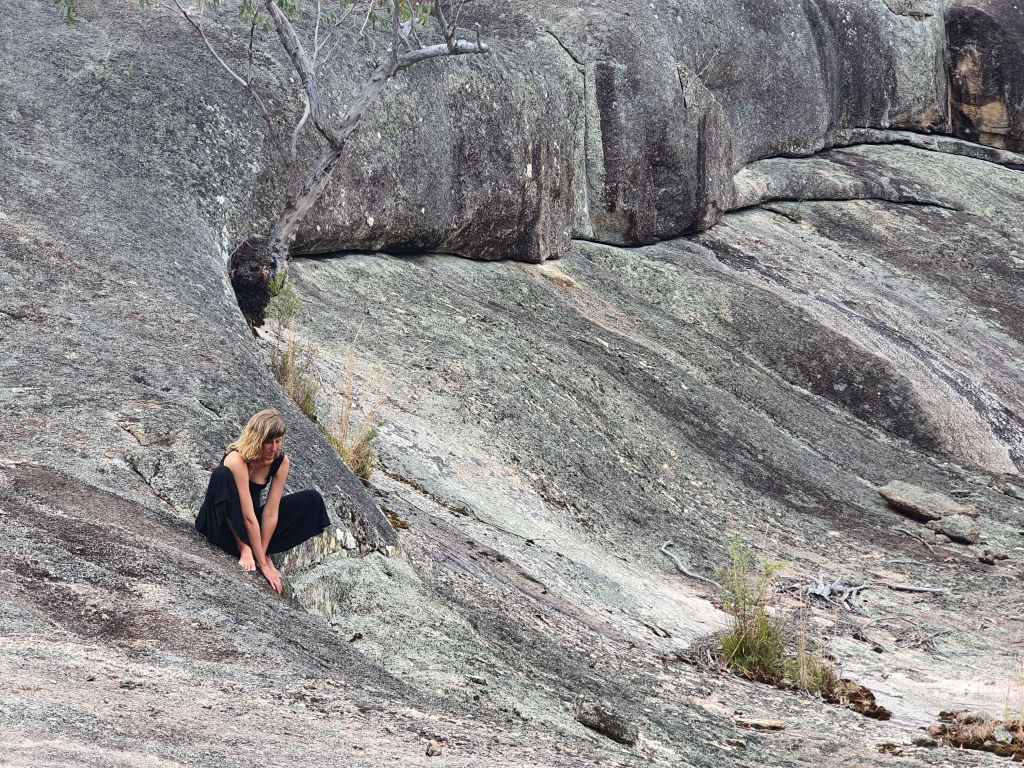
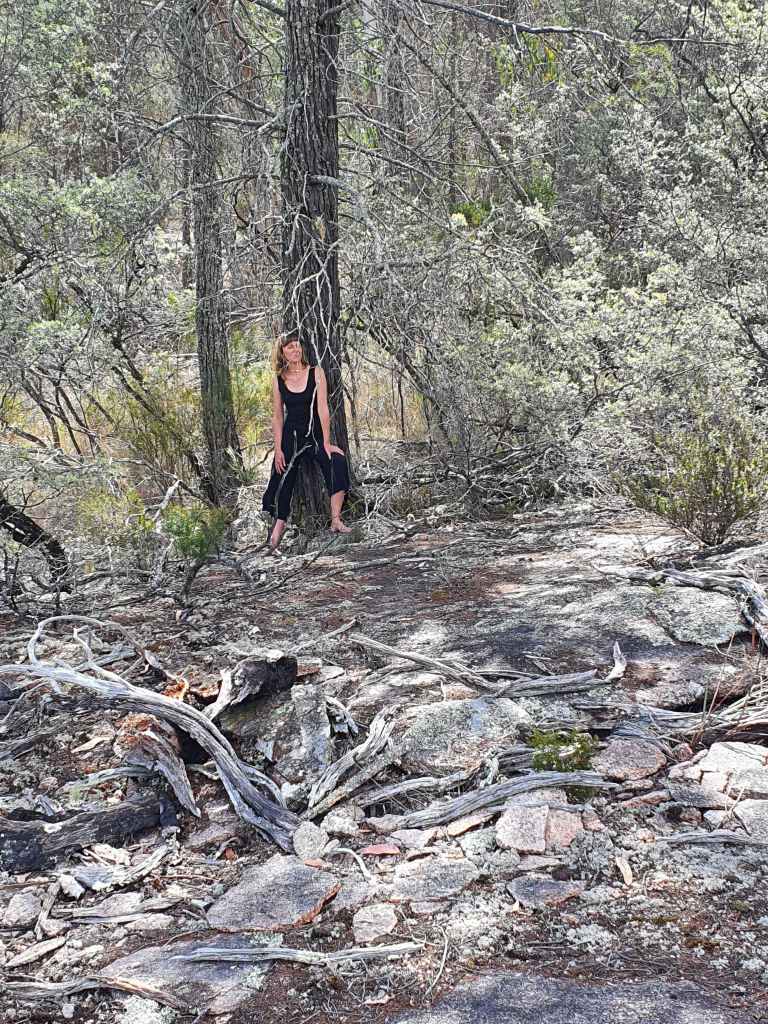
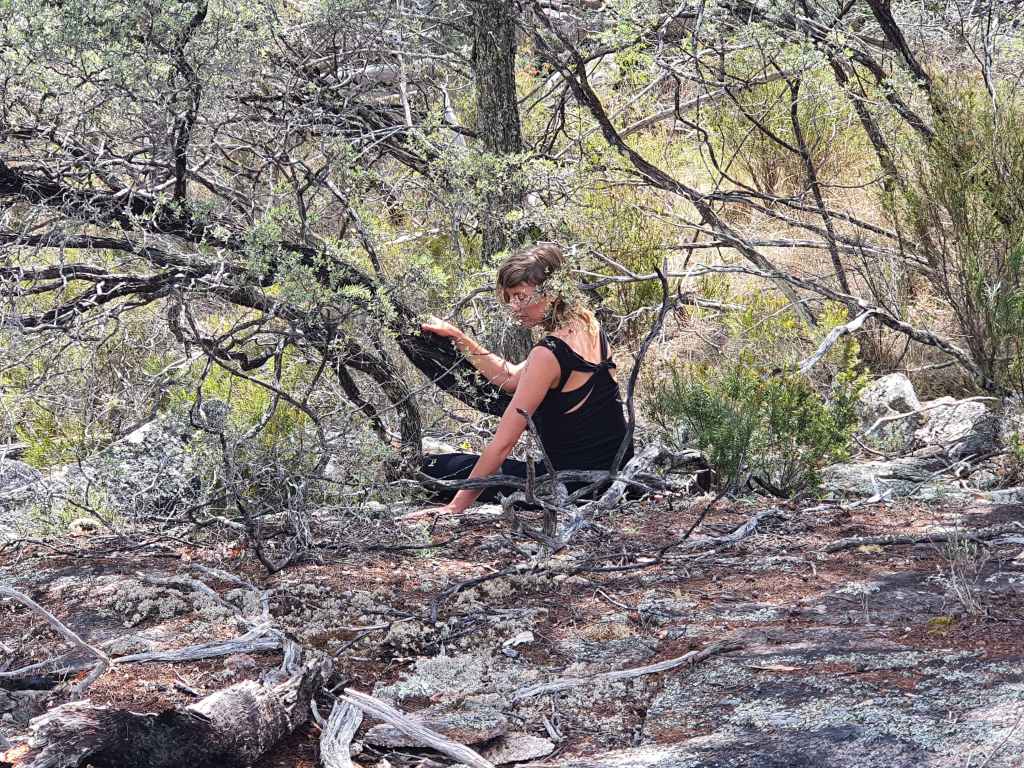
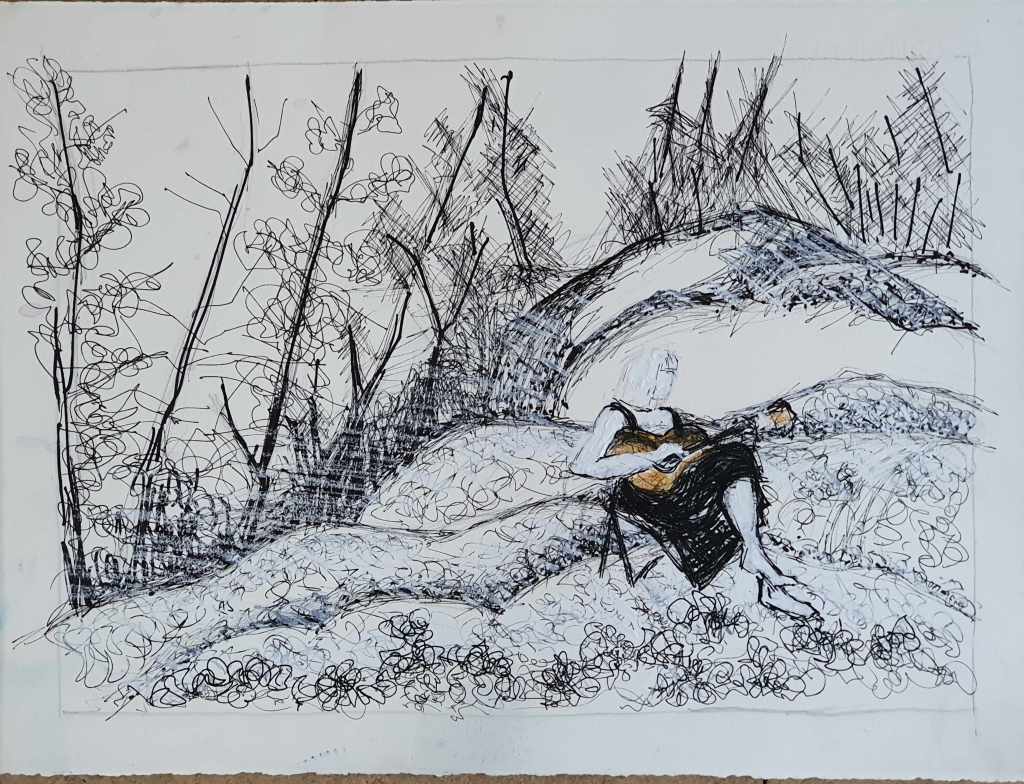
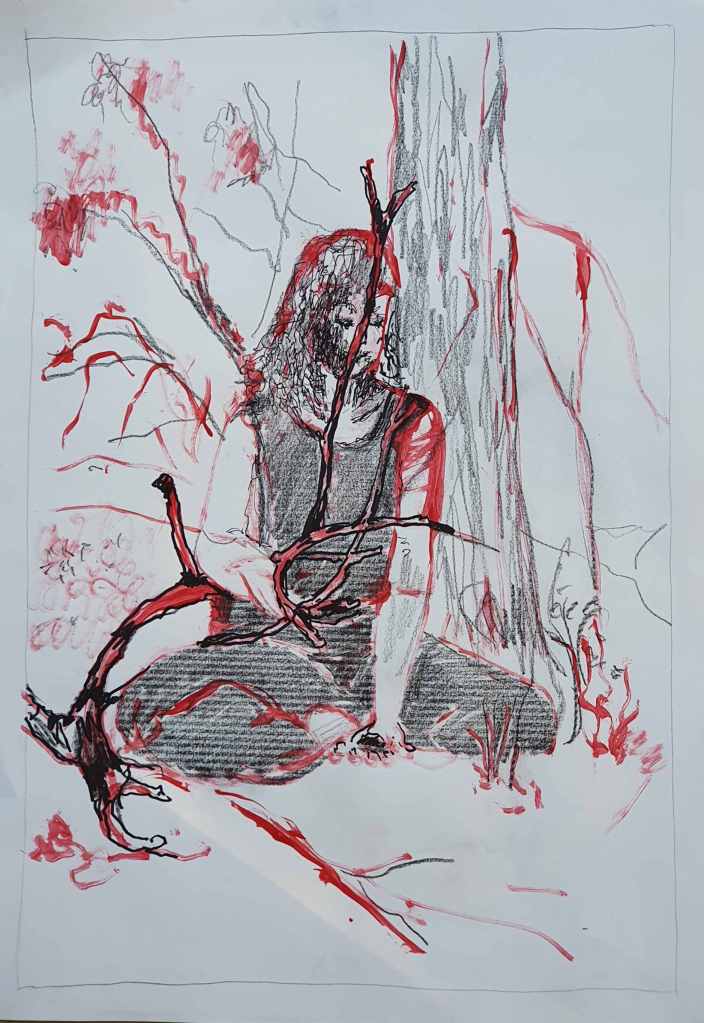
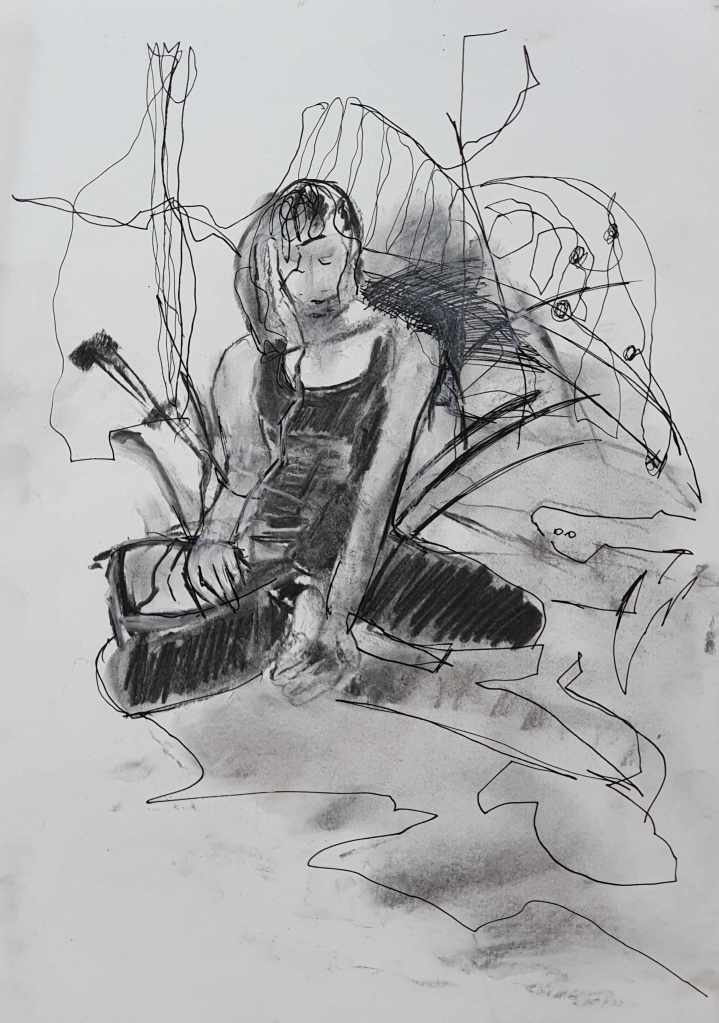
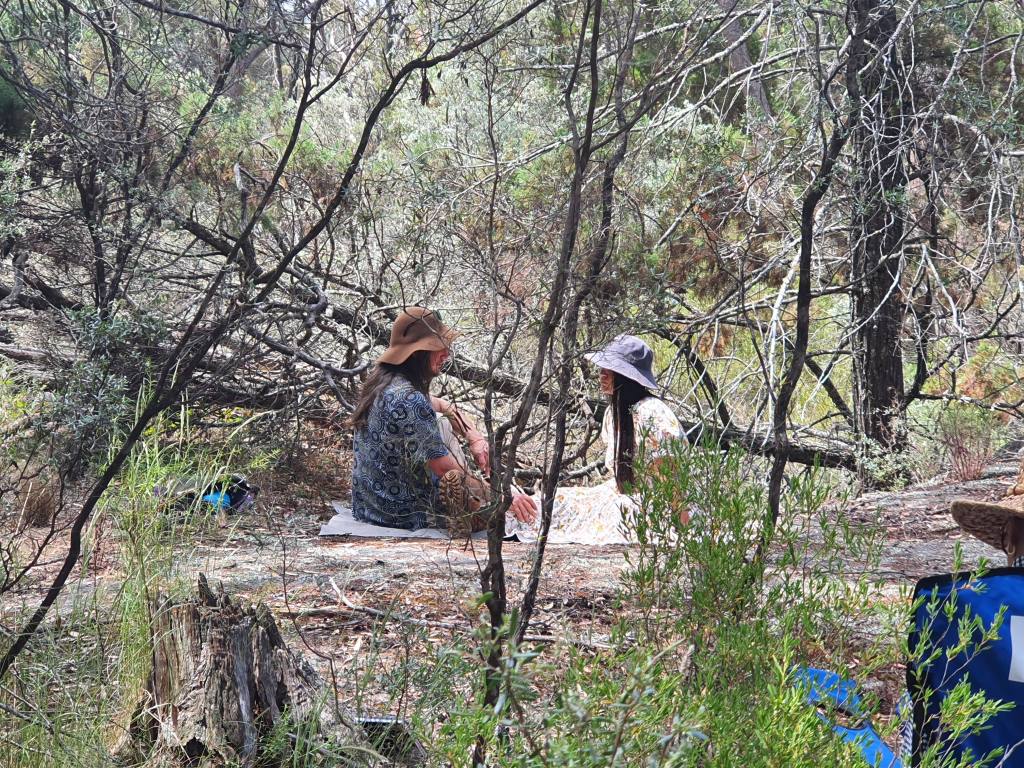
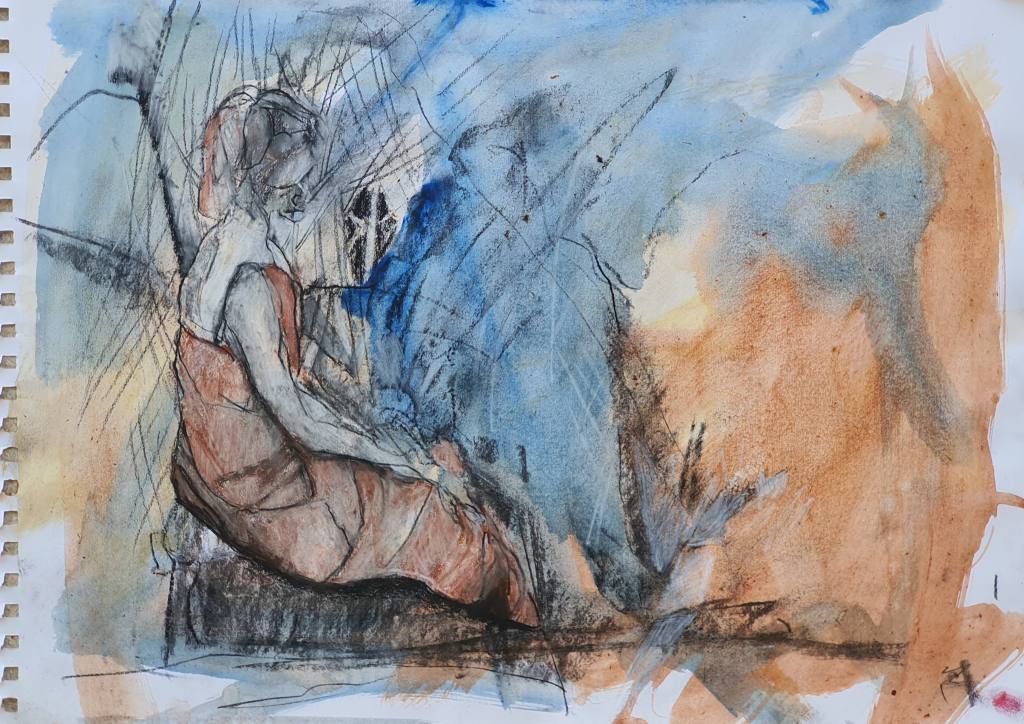
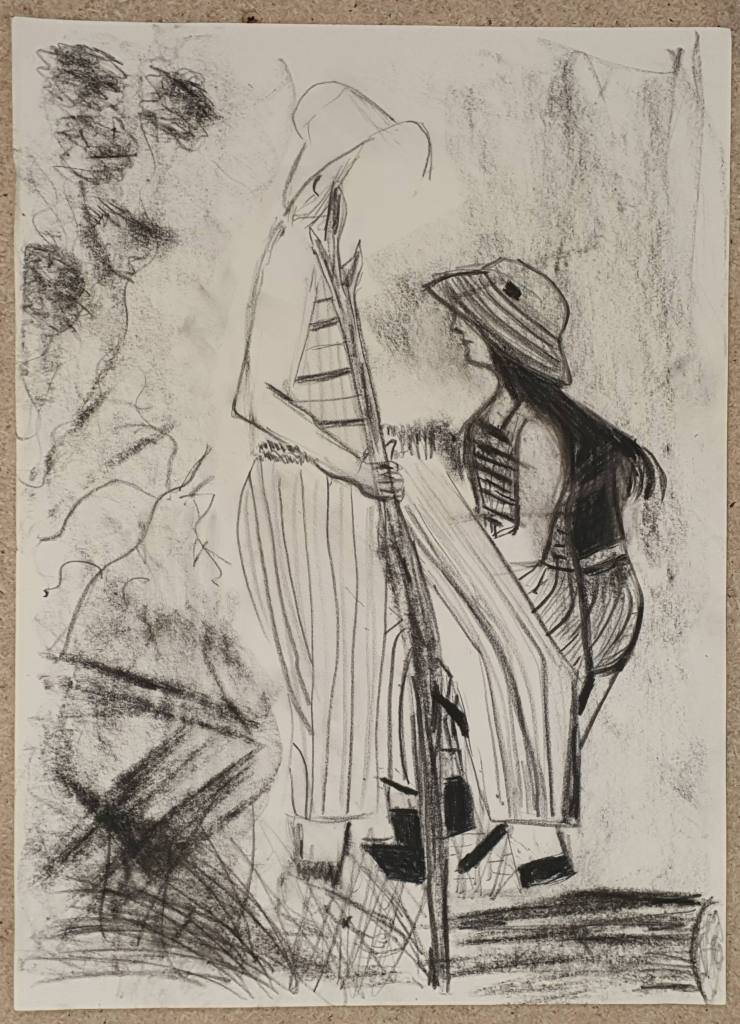
Our model Casey in some of the improvised poses she developed in and around the natural amphitheatre where we based ourselves for the workshop.
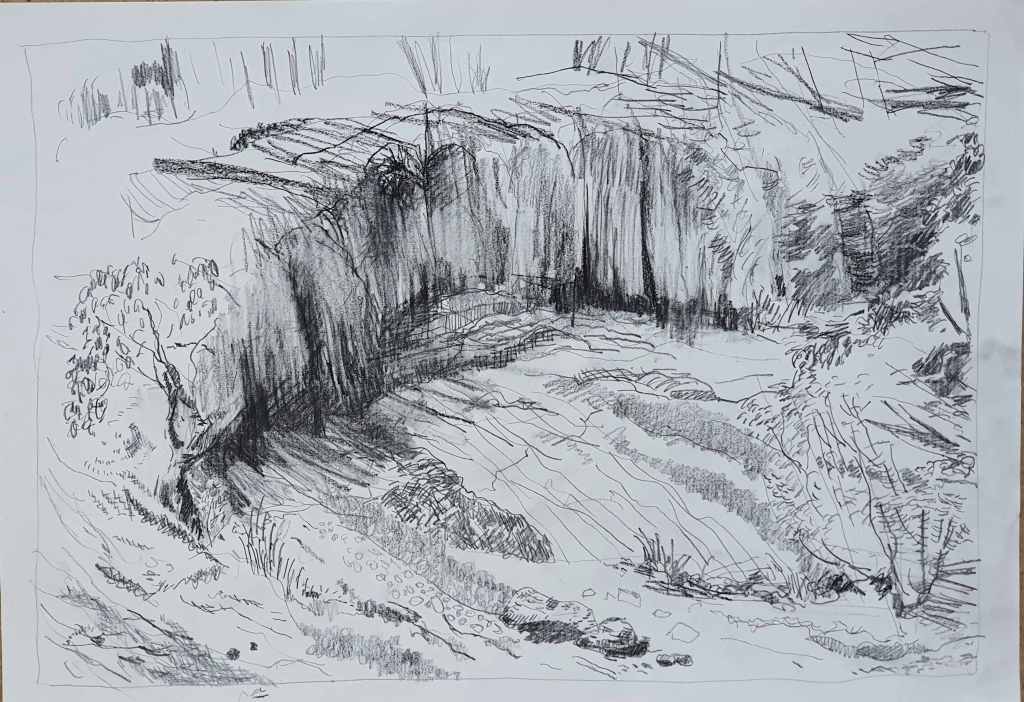
Our latest weekend workshop considered the figure in landscape from a notion of refuge, of the human form absorbed in the natural light and engulfed within the textures of vegetation and the rock flow where we based ourselves for the two day workshop.
We discussed a quote from Rilke :
… (one) will hear more of the powerful melody of the background, the other less. Many no longer hear it at all. They are like trees that have forgotten their roots and now think that the rustling of their branches is their power and their life.
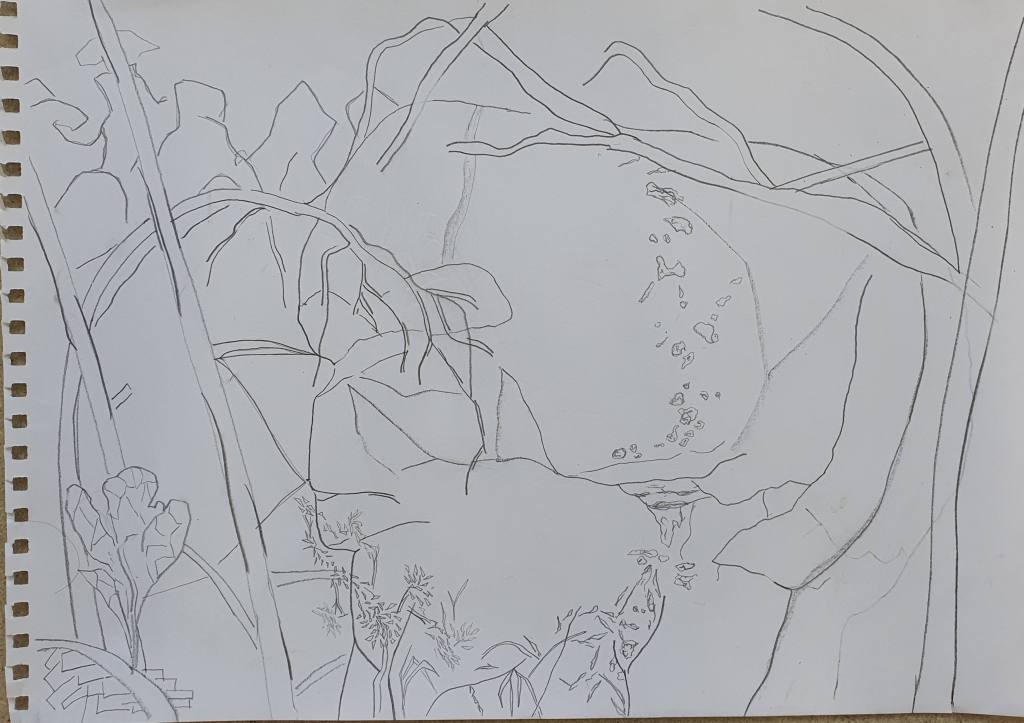
We discussed transitioning the scene from its reality to a flat rectangle of paper; how space as continuity and in isolation are formed within pictorial space through conventions and inventions of language.
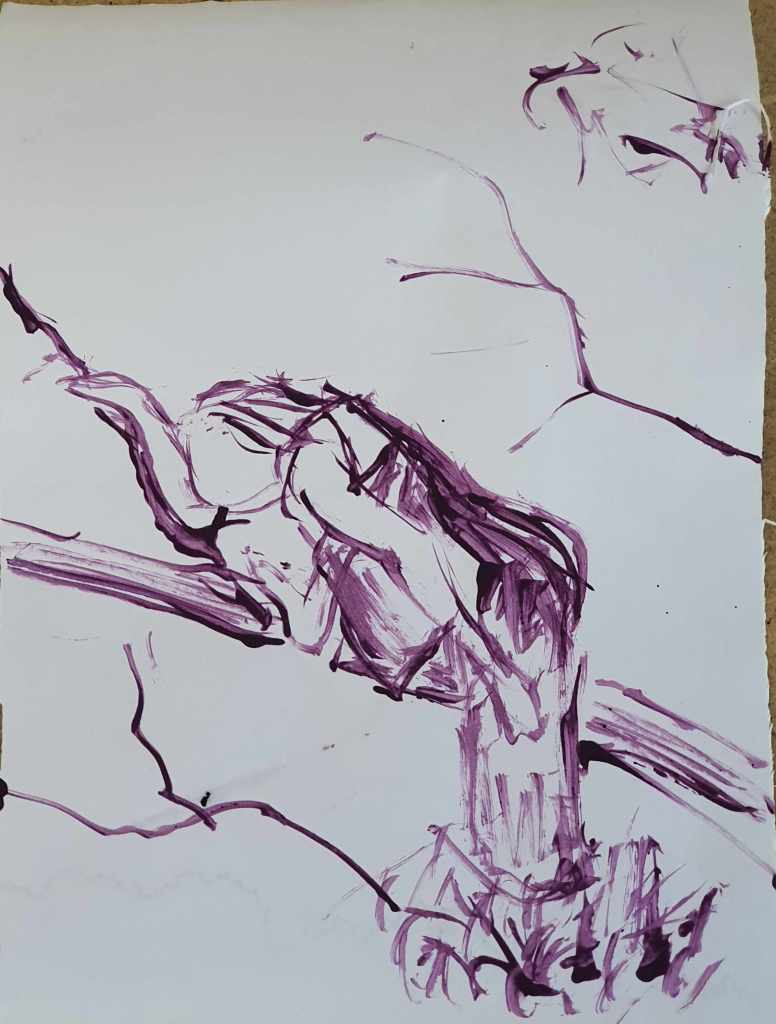
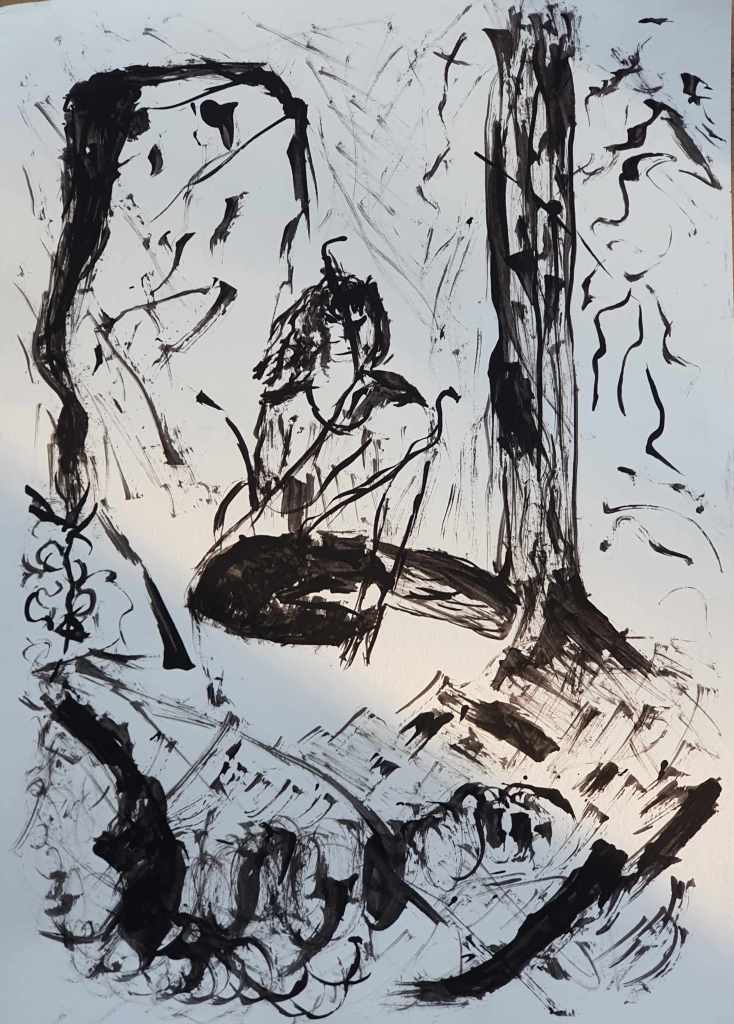
These themes activated by the natural surrounds and the energised poses created by our model Casey brought out some really interesting work from the participating artists who put their all into rising to the occasion. Here is a selection of the work they made.
Our 2022 Workshops concluded on the weekend. While the natural environment of the granite highlands in itself draws participants we decided to continue an experiment begun in a previous workshop series, by adding a human element to the subject.
Danielle Rochecouste Kate Sunderland
On each of the recent weekends we provided models, a different one for each day. A discussion in the morning ascribed a character to the model while the particular landscape setting provided an individual scenario for the drawing session.
Lynne SamsonCandice Hooper Jane Hooper Helen Rowe
We’re interested in bridging a cultural and natural divide and developing stories of people in nature, stories, initially that have their origins in histories that haven’t been overrun by mythological constructs.
The Human element is intended to absorb the artist into the scene and to draw out stylistic choices based on cultural associations not stereotypically paired with scenic painting and drawing.
Carolyn O’Keefe Katie Yeowart
The results are encouraging, with artists finding resources both from within their repertoire of methods and from cultural experiences to apply in creating inventive pictorial works.
We will be publishing the 2023 workshop schedule early in the new year. All the best and thanks to all participants in helping to create memorable and meaningful events.
Deborah Hay Alice Cavanagh Deborah Norrie-Jones Peter Noakes Vicki Briggs
In developing the theme of our current workshops we ask – what is it that deepens a connection to landscape? Past events delivering their experience to the present can enable us to project a relational environment into the landscape.
We start from the idea that there are multiple histories embedded in the country. Visual culture carries threads of stories by style and mode of storytelling – the figure in the landscape can be a conduit for connecting threads flowing through time and space.
Specifically in the coming weekends we plan to have a different model on each day. we’ll present a storyline context for the day which will be divided into two sessions, each with a different angle into the day’s story.
Practical information for the weekend:
Materials – please bring a manageable array of your usual dry and wet materials for drawing and painting. Paper in book form or sheets A4 to A3. Bear in mind we will be walking into the landscape 100 metres or less for the practical sessions so fit it into a carrying bag. A low folding stool would be useful as ants are a significant civilization in this country.
You’ll be entering the bush so you will need protective clothing hat and boots. Please consult weather forecast to decide on necessary clothing. If the weather is really difficult we will be able to use the new studios which are situated in a natural environment with large windows into rock and forest views.
We ask everyone to come to the property at 8 – 8.30 am in order to organize for a 9 am start in the bush situation. Sessions will run from 9am to 12pm and 1pm to 4pm.
We will supply lunch so please let us know by email of your dietary needs if necessary. Bring a flask with you for hot drinks, we can supply tea and coffee with lactose-free milk.
Our first painting and drawing workshop on Haneena Hill in the Amiens Highland forest brought together a really cohesive group of six artists; individuals expending the effort to extract themselves from the city into the cool winter clime of the Granite Belt. (For their comments Search for Reviews in the dropdown menu)
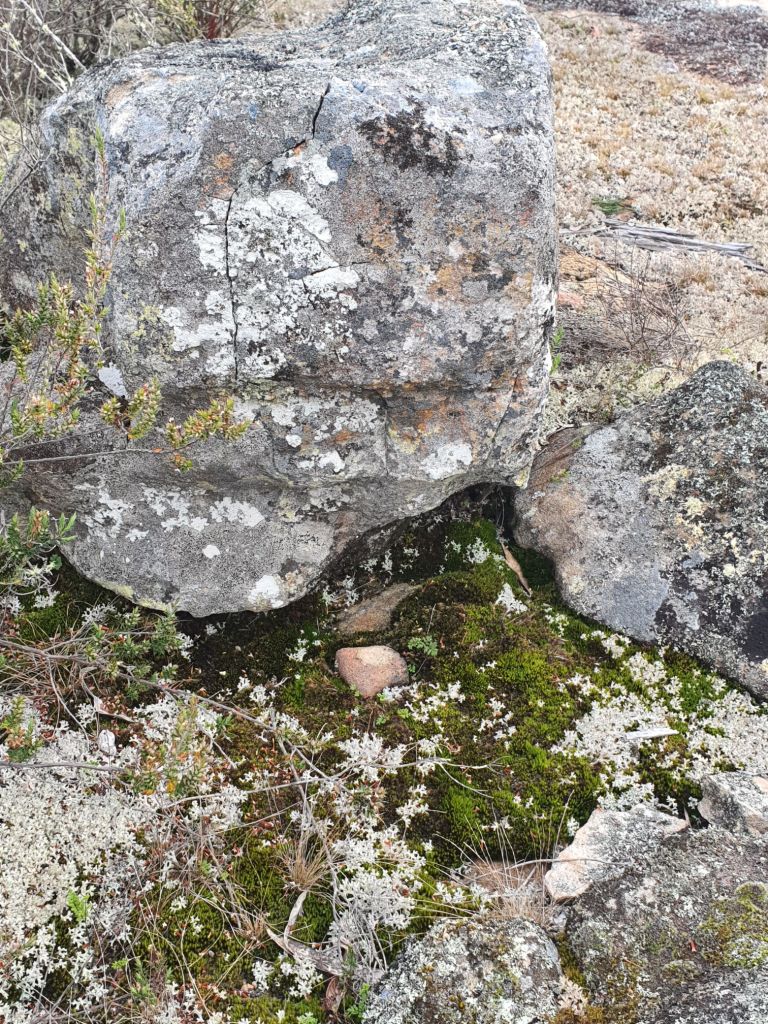
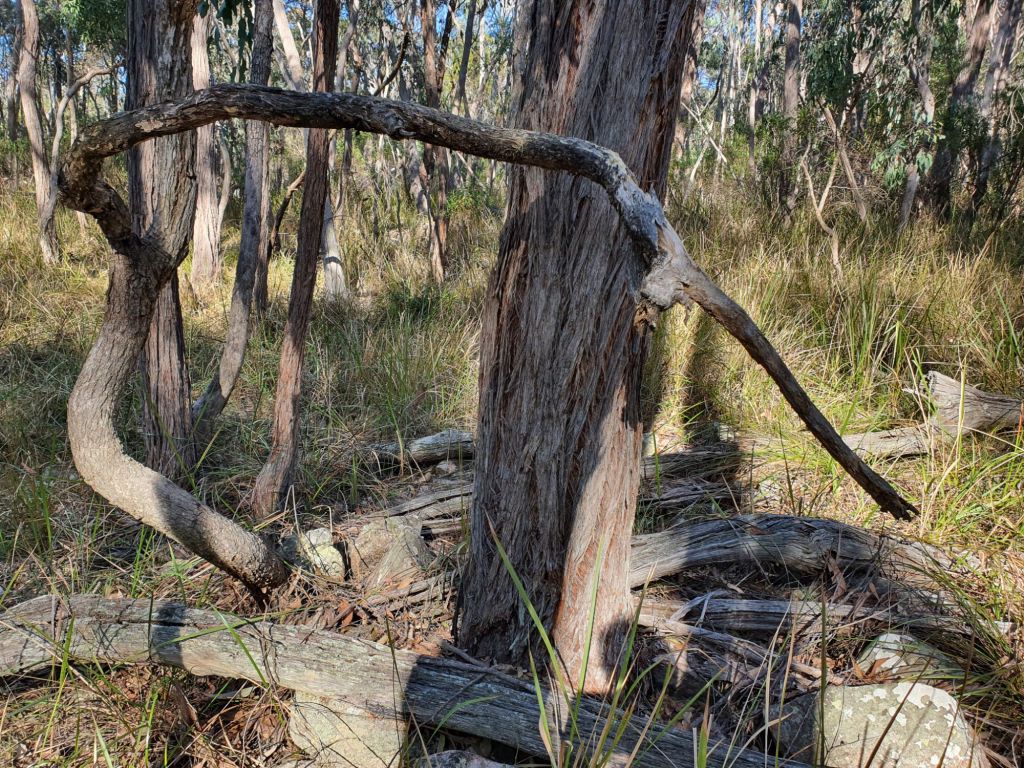
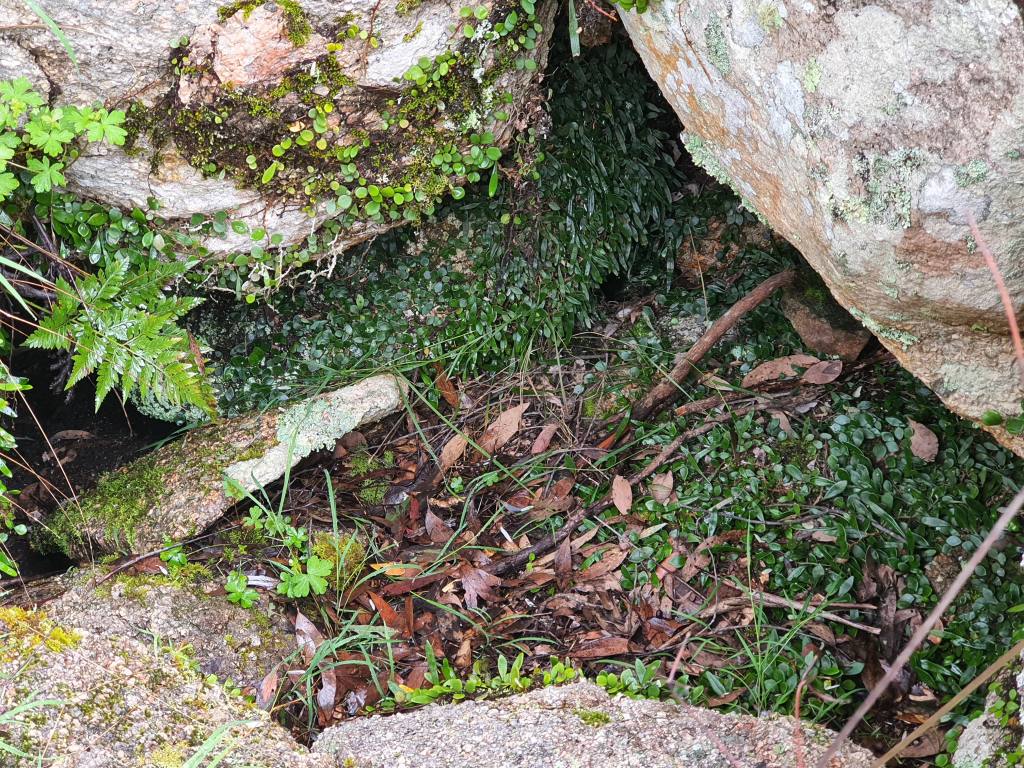
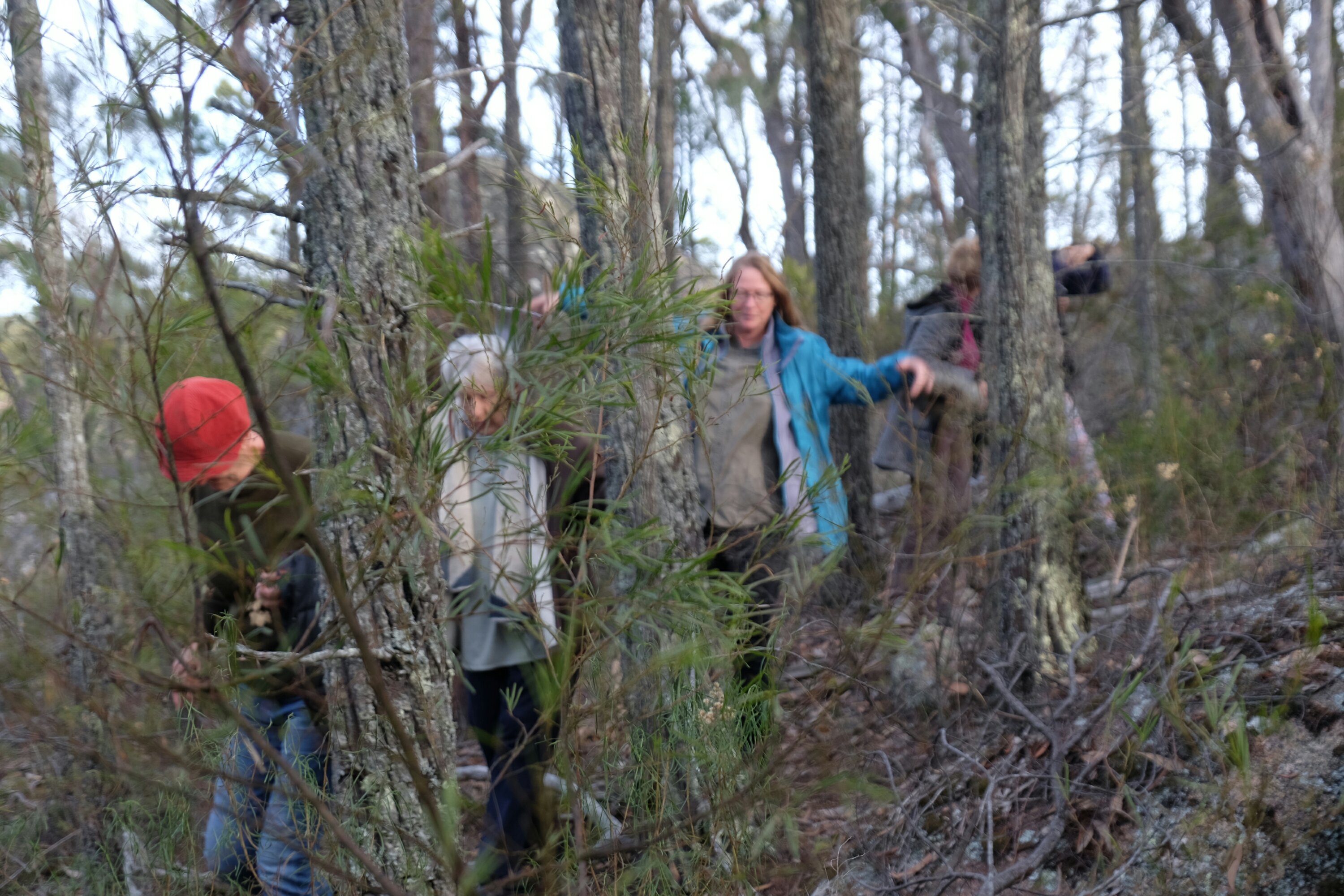
The workshop day began with an early morning immersive walk through the forest and over the granite escarpment. Here, the geometric moss-green spires of cypress pines within a grey and white tangle of Angophra and stringy bark, and there, the weathered waves of grey granite dissolving in the light and brought into visual focus by textures of lichen, algae and moss.
You’re not looking at this landscape so much as looking into it; there are fewer opportunities for the picturesque than for imaginative reflection.
With a tangle of lines like an improvised Chinese ice crystal screen, leading the eye through space with the promise of an emerging shape, an object of some kind is suggested before turning vision in on itself.
A connection between physical movement and visual experience brings thoughts of the Provence landscape’s influence on Cezanne.
His invention of an angular geometry, listing lines suggesting visual perspective and physical movement, as if the human body, tossed in the winds of a highland landscape has only a cosmic scale of gravity to orient itself.
The house worked well to accommodate everyone and Barbara’s kitchen production fed the appetites brought on by the intensive painting and drawing en plein air. Some good Shiraz and Pinot Gris from the nearby Casley Mount Hutton vineyards were a great discovery.
We are pleased to announce the inaugural highland art workshop High Time to be held on the 29th June – 1st July 2018 at our family’s 60 acre property Haneena Hill in the Granite Belt near Stanthorpe, Queensland, altitude 1100 metres, approximately 3 hours drive from Brisbane
ABOUT US
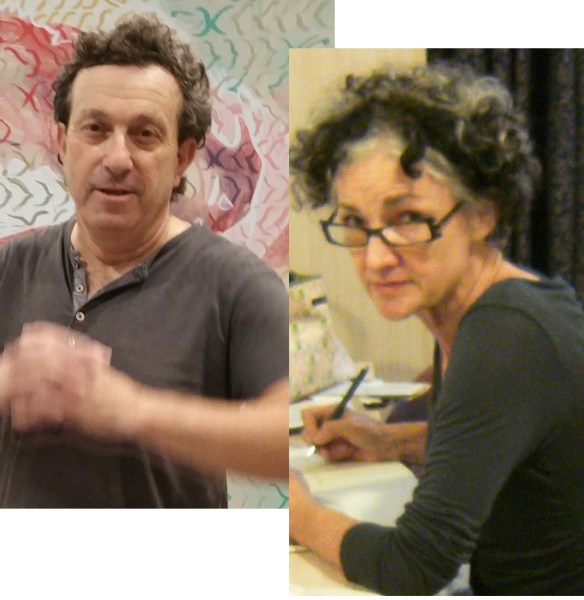
Nameer Davis BAHo, MA maintains a full-time studio practice together with weekly teaching in painting and drawing at the Brisbane Institute of Art. Born in England, growing up in Nigeria, Australia and the UK, with extensive travels to China and Europe, Nameer’s work reflects a diversity of cultural influences most recently through pattern and textile.
Barbara Penrose BAHo, MA exhibits regularly and has numerous public art commissions across Brisbane and Regional Queensland. In 2006 and in 2011 Barbara was the recipient of Australia Council grants for experienced artist to produce new work. With a background in installation art, sculpture and painting, her current practice mediates between painting, drawing and ceramics.
WORKSHOPS
High Time is the first in a series of workshops offering an immersive experience of art and landform set in a unique ancient granite terrain and old growth forest. This drawing and painting workshop will be conducted through discussion, one-on-one/ group tuition and independent exploration and will include relaxed after dinner image presentations all in a much-loved heritage residence.
We have enjoyed drawing, painting and walking here for many years, the dramatic boulder forms and escarpments possess a great variety of textures in lichen growth, moss and rock crystal. In this workshop we’ll focus on the screen-like quality of the encounter with these surfaces, using methods of pattern making and image sampling to engage in the drawing and painting process. To paint and draw in situ we will set up art materials on tarps (provided) as a personal space from which to explore the environment.
ITINERARY
Friday
Arrive late afternoon / early evening – Dinner and get to know each other.
Introduction to the place and the ideas to be developed over the weekend.
Saturday
7.30 – 8.30 Breakfast
9.30 – 12.30 Tutored workshop in the environment with Nameer.
1 – 2 Lunch
2 – 4 Independent practices in the environment and one-on-one consultations with Nameer
Free time
6.30 pre dinner refreshments
7.00 dinner
Image Presentation
Sunday
7.30 – 8.30 Breakfast
9.30 – 12.30 Tutored worskshop in the environment with Nameer
1 – 2 Lunch
2.30 – departure
WHAT YOU NEED TO KNOW
Cost per person for the workshop is $390. Enquire/book your place here
Workshop numbers are limited to six people. For future workshop dates and themes please subscribe to this website for further notice.
Accomodation is in a spacious heritage residence with wood heater and dormitory style sleeping arrangements.
Each person will need to bring their own sheet and doona/blanket/ pillow and towel
Meals and refeshments provided, notify of special dietary requirements
The tutored sessions will require some walking on easy to medium grade bush trails and rocks
Stanthorpe is a sub-alpine highland so you’ll need to bring warm clothes, gloves, coat and sealed boots
Art materials – Bring your usual range of drawing and painting media, some materials will be provided
The 2018 Stanthorpe Art Prize exhibition will be on this weekend at the Stanthorpe Regional Art Gallery














 High Country Deep Time Drawing and Painting Workshops